Introduction
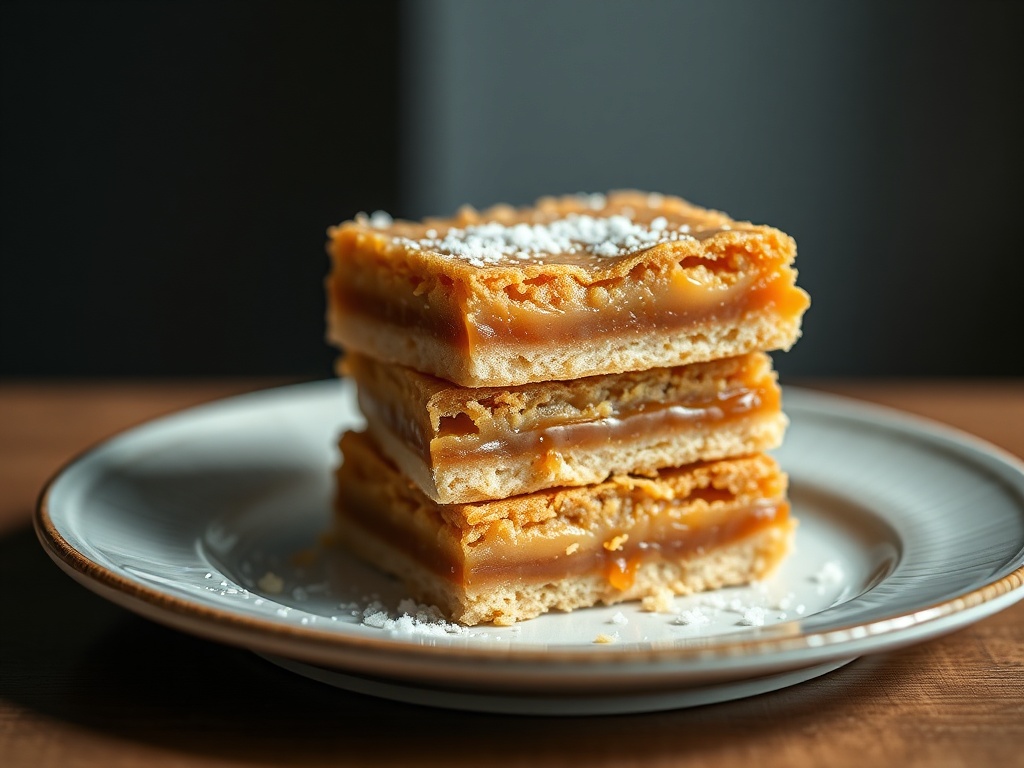
Prepare your taste buds for an unparalleled journey into the world of sweet and salty bliss. These Irresistible Salted Caramel Butter Bars are more than just a dessert; they are an experience, a symphony of textures and flavors that will captivate your senses from the very first bite. Imagine a golden, buttery shortbread crust, yielding perfectly to a rich, gooey layer of homemade salted caramel, all crowned with a delightful, crumbly shortbread topping. This isn’t just baking; it’s crafting pure indulgence.
What makes these bars truly irresistible? It’s the masterful dance between opposing forces – the deep, comforting sweetness of the caramel beautifully contrasted by the sharp, bright kick of flaky sea salt. The tender, melt-in-your-mouth quality of the shortbread provides the perfect foundation, offering a satisfying crumbly texture that plays exquisitely against the smooth, chewy caramel. Each component is designed to complement the others, creating a harmonious treat that is both sophisticated and deeply satisfying. They are perfect for impressing guests at a potluck, celebrating a special occasion, or simply treating yourself to a moment of pure, unadulterated comfort.
While these bars boast an impressive appearance, hinting at complex culinary skills, the truth is, they are surprisingly approachable for home bakers of all levels. We’ve broken down every step, from preparing the simple shortbread dough to crafting the luscious caramel, ensuring your baking journey is as enjoyable and stress-free as the eating experience itself. So, gather your ingredients, preheat your oven, and get ready to create a dessert that will undoubtedly earn you rave reviews and requests for the recipe.
Nutritional Information
Per serving (approximate values):
- Calories: 380
- Protein: 3g
- Carbohydrates: 48g
- Fat: 20g
- Fiber: 1g
- Sodium: 250mg
Ingredients
For the Shortbread Crust & Crumble:
- 2 ½ cups all-purpose flour
- ¾ cup granulated sugar
- ½ teaspoon salt
- 1 cup (2 sticks) unsalted butter, very cold and cut into 1-inch pieces
For the Salted Caramel:
- ½ cup (1 stick) unsalted butter
- 1 cup packed light brown sugar
- ½ cup heavy cream (at least 36% milk fat)
- 1 teaspoon pure vanilla extract
- 1 teaspoon flaky sea salt, plus more for sprinkling
Instructions
- Preheat your oven to 350°F (175°C). Line a 9×13 inch baking pan with parchment paper, leaving an overhang on the sides for easy removal. This is crucial for lifting the entire slab out later.
- Prepare the Shortbread: In a large mixing bowl, whisk together the all-purpose flour, granulated sugar, and ½ teaspoon salt.
- Add the very cold, cubed butter to the dry ingredients. Using a pastry blender, two knives, or your fingertips, cut the butter into the flour mixture until it resembles coarse crumbs with some pea-sized pieces of butter remaining. Be careful not to overmix, as this can develop gluten and lead to a tough crust.
- Divide the shortbread mixture into two unequal portions: set aside about 1 ½ cups for the crumble topping.
- Press the larger portion of the shortbread mixture evenly into the bottom of the prepared 9×13 inch baking pan. Use the bottom of a measuring cup or your hands to create a firm, compact crust.
- Bake the shortbread crust for 18-20 minutes, or until the edges are lightly golden. Remove from the oven and set aside while you prepare the caramel. Keep the oven on.
- Make the Salted Caramel: In a heavy-bottomed saucepan, melt ½ cup (1 stick) unsalted butter over medium heat.
- Add the packed light brown sugar to the melted butter and whisk until well combined and smooth.
- Pour in the heavy cream and bring the mixture to a gentle boil, stirring occasionally. Once boiling, reduce the heat to low and simmer for 5-7 minutes, stirring occasionally, until the caramel thickens slightly. It should coat the back of a spoon.
- Remove the saucepan from the heat. Stir in the vanilla extract and 1 teaspoon of flaky sea salt until fully incorporated.
- Assemble and Bake: Carefully pour the warm salted caramel evenly over the partially baked shortbread crust in the pan. Spread with a spatula if needed to reach the edges.
- Evenly sprinkle the reserved 1 ½ cups of shortbread crumble mixture over the caramel layer.
- Return the pan to the oven and bake for another 20-25 minutes, or until the crumble topping is lightly golden brown and the caramel is bubbly around the edges.
- The Waiting Game: This is arguably the hardest part! Once baked, remove the pan from the oven and place it on a wire rack to cool completely. This means several hours at room temperature, or you can speed it up by refrigerating it for at least 2-3 hours once it’s no longer hot. Cooling completely is absolutely crucial for the caramel to set properly and for clean, neat cuts.
- Once completely cool and firm, use the parchment paper overhang to carefully lift the entire slab of bars out of the pan and onto a cutting board.
- Using a sharp, warm knife (you can run it under hot water and wipe it dry between cuts), cut the bars into desired squares or rectangles. For perfectly even bars, you can use a ruler to mark out cuts before slicing. Clean your knife between each cut for the neatest edges.
- Sprinkle with additional flaky sea salt just before serving, if desired.
Cooking Tips and Variations
For the best shortbread, ensure your butter is very cold. This helps create those pockets of butter that melt during baking, resulting in a tender, crumbly texture. If your kitchen is warm, you can even pop the cut butter back into the freezer for 10-15 minutes before mixing. When making the caramel, a heavy-bottomed saucepan is your best friend as it distributes heat more evenly and reduces the risk of scorching. While simmering the caramel, avoid constant stirring; let it bubble gently, just stir occasionally to prevent sticking. If your caramel seems too thin after simmering, continue to cook it gently for a few more minutes until it coats the back of a spoon. Conversely, if it becomes too thick upon cooling, a tiny splash of warm heavy cream can help loosen it.
These bars are wonderfully versatile for flavor variations. For a decadent twist, consider adding a chocolate drizzle: melt ½ cup of chocolate chips (dark, milk, or white) with a teaspoon of coconut oil, then drizzle over the fully cooled bars before cutting. For a nutty crunch, incorporate ½ cup of finely chopped pecans or walnuts into the shortbread crumble mixture before sprinkling it on top. If you’re a coffee lover, a teaspoon of espresso powder added to the caramel will deepen its flavor profile beautifully. For a touch of warmth and spice, try adding ¼ teaspoon of ground cinnamon or nutmeg to the shortbread flour mixture. These small additions can transform the bars into a new, exciting experience every time you make them.
Storage and Reheating
These Irresistible Salted Caramel Butter Bars store beautifully, making them an excellent make-ahead dessert. Once completely cooled and cut, transfer the bars to an airtight container. They can be stored at room temperature for up to 3-4 days, though in warmer climates or if your home is particularly warm, refrigeration is recommended. When refrigerated, they will last for up to a week. If storing in the refrigerator, allow them to come to room temperature for about 15-20 minutes before serving for the best texture, as the caramel will firm up when cold. You can also microwave a single bar for 10-15 seconds to slightly warm the caramel and soften the shortbread, creating a wonderfully gooey treat.
These bars also freeze exceptionally well, which is great news if you want to prepare them far in advance or save some for later cravings. To freeze, place the cut bars in a single layer on a baking sheet and freeze until solid (about 1-2 hours). Once frozen, transfer them to a freezer-safe airtight container or a heavy-duty freezer bag, separating layers with parchment paper to prevent sticking. They can be stored in the freezer for up to 2-3 months. When ready to enjoy, simply thaw them at room temperature for a few hours, or overnight in the refrigerator. Reheating from frozen is not typically recommended as it can affect the texture of the shortbread and caramel. Always ensure they are fully thawed before serving for optimal enjoyment.
Frequently Asked Questions
How do I know when the caramel is thick enough?
The caramel is ready when it coats the back of a spoon. If you run your finger across the spoon through the caramel, the line should hold for a few seconds before the caramel slowly fills it in. It won’t be extremely thick like fudge when hot, but it will noticeably thicken as it cools. Don’t worry if it seems a bit thin; it will set up considerably once cooled.
Can I use salted butter instead of unsalted?
While you can use salted butter, it’s generally recommended to use unsalted butter for baking, especially for the shortbread. This gives you precise control over the salt content. If you must use salted butter, omit the ½ teaspoon of salt from the shortbread crust recipe and reduce the flaky sea salt in the caramel to ½ teaspoon, then taste and adjust as needed.
My shortbread crust crumbled when I tried to press it. What went wrong?
If your shortbread mixture is too dry and crumbly to press into a cohesive crust, it might be that your butter was not cold enough or you didn’t press it firmly enough. You can try adding a teaspoon or two of ice-cold water, one at a time, to the mixture and gently mixing until it just comes together enough to press. However, ensure you don’t add too much liquid, as this can make the crust tough. Firmly pressing with the bottom of a measuring cup is key to creating a solid base.
Why is my caramel hard or too chewy after cooling?
If your caramel becomes too hard or excessively chewy, it likely means it was cooked for too long or to too high a temperature. The sugar concentration became too high. For a softer, gooier caramel, ensure you stick to the simmering time of 5-7 minutes and watch for the “coat the back of a spoon” consistency rather than overcooking it. Using a candy thermometer can provide precision, aiming for about 240°F (115°C) for a soft-ball stage caramel.