Introduction
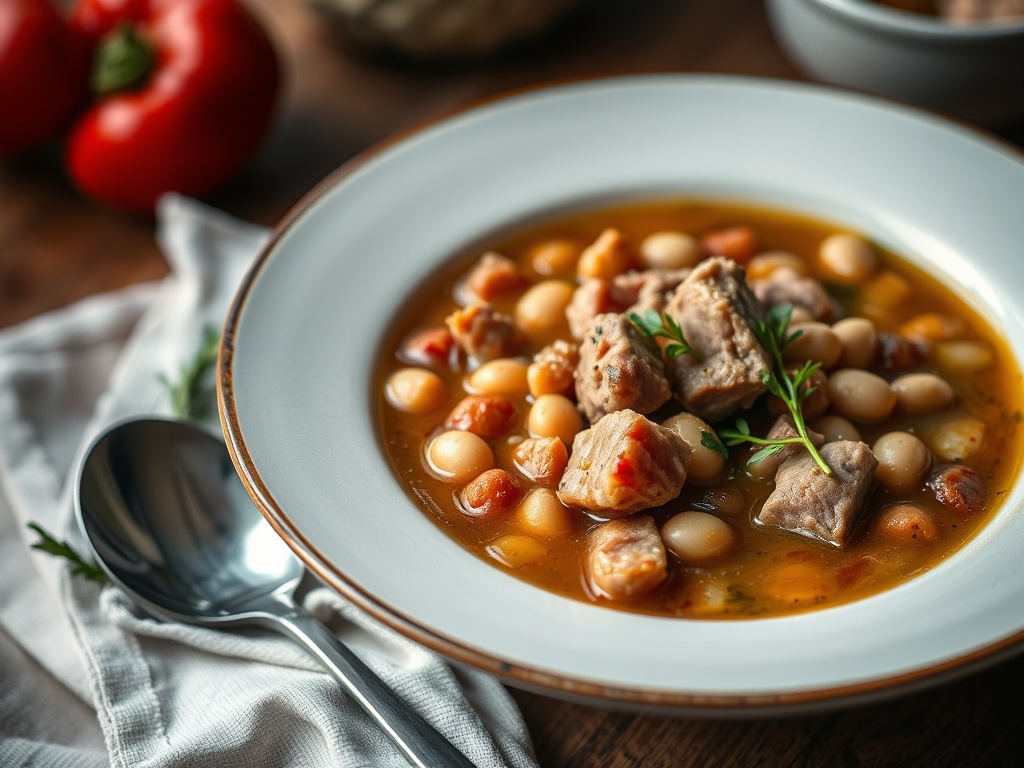
There are some dishes that simply wrap you in a warm embrace, and Hearty Navy Bean and Ham Hock Soup is undoubtedly one of them. This isn’t just a meal; it’s a culinary hug, a savory symphony of flavors that evokes feelings of home, comfort, and deep satisfaction. Imagine a chilly evening, a steaming bowl cradled in your hands, the rich aroma of smoked ham and tender beans filling the air – that’s the magic this soup delivers. It’s a dish that warms you from the inside out, providing nourishing sustenance and a profound sense of well-being with every spoonful.
Often associated with simpler times and resourceful cooking, Navy Bean and Ham Hock Soup has a rich history rooted in making the most of humble, yet incredibly flavorful, ingredients. Historically, it was a staple in many households, especially after a holiday feast when leftover ham bones and hocks were transformed into something truly spectacular. This recipe celebrates that tradition, focusing on extracting maximum flavor from inexpensive components to create a soup that tastes anything but cheap. Its enduring popularity lies in its incredible depth of flavor, its ability to satisfy even the heartiest appetites, and its undeniable capacity to bring people together around the table.
What makes this particular recipe stand out is its commitment to flavor development and ease, ensuring that even novice cooks can achieve a restaurant-quality result. We’ll delve into the secrets of tender, creamy navy beans, the transformative power of a smoked ham hock, and the simple techniques that elevate everyday ingredients into an extraordinary culinary experience. Whether you’re feeding a hungry family, looking for a budget-friendly yet gourmet meal, or simply craving a taste of authentic American comfort food, this Hearty Navy Bean and Ham Hock Soup is destined to become a cherished favorite in your kitchen.
Nutritional Information
Per serving (approximate values):
- Calories: 380
- Protein: 30g
- Carbohydrates: 45g
- Fat: 10g
- Fiber: 15g
- Sodium: 850mg
Ingredients
- 2 cups (approx. 1 pound) dried navy beans
- 1 large smoked ham hock (about 1.5 – 2 pounds)
- 2 tablespoons olive oil
- 1 large yellow onion, chopped
- 2 carrots, peeled and diced
- 2 celery stalks, diced
- 4 cloves garlic, minced
- 8 cups (2 quarts) chicken broth or water
- 1 bay leaf
- 1 teaspoon dried thyme
- 1/2 teaspoon black pepper
- 1/4 teaspoon cayenne pepper (optional, for a hint of heat)
- Salt to taste (add sparingly at the end)
- 2 tablespoons fresh parsley, chopped (for garnish)
- 1-2 tablespoons fresh lemon juice or apple cider vinegar (optional, for brightening flavor)
Instructions
- Soak the Navy Beans: Rinse the dried navy beans thoroughly under cold water. There are two methods for soaking:
- Overnight Soak: Place the rinsed beans in a large bowl and cover with at least 4 inches of cold water. Let them soak for 8-12 hours, or overnight, at room temperature.
- Quick Soak: Place the rinsed beans in a large pot and cover with water (about 3 inches above the beans). Bring to a rolling boil for 5 minutes, then remove from heat, cover, and let stand for 1 hour.
After soaking, drain the beans and rinse them again. Discard the soaking water.
- Prepare the Ham Hock: While the beans are soaking or after draining, rinse the ham hock under cold water. Pat it dry with paper towels.
- Sauté the Aromatics: In a large Dutch oven or heavy-bottomed pot, heat the olive oil over medium heat. Add the chopped onion, carrots, and celery. Sauté for 8-10 minutes, stirring occasionally, until the vegetables have softened and the onion is translucent.
- Add Garlic and Spices: Stir in the minced garlic, dried thyme, black pepper, and cayenne pepper (if using). Cook for another 1-2 minutes until fragrant, being careful not to burn the garlic.
- Combine and Simmer: Add the drained navy beans, the rinsed ham hock, chicken broth (or water), and the bay leaf to the pot. Bring the mixture to a boil over medium-high heat. Once boiling, reduce the heat to low, cover the pot, and let it simmer gently for at least 2 to 2.5 hours, or until the beans are very tender and the ham hock meat is falling off the bone. Stir occasionally to prevent sticking.
- Check for Doneness and Shred Ham: After 2 to 2.5 hours, carefully remove the ham hock from the pot using tongs. Transfer it to a cutting board. The beans should be creamy and tender. If they are still firm, continue simmering until they reach the desired consistency.
- Shred the Ham Meat: Once the ham hock is cool enough to handle, separate the meat from the bone, skin, and any excess fat. Discard the bone, skin, and fat. Shred the tender ham meat into bite-sized pieces.
- Thicken (Optional): For a thicker soup, you can remove about 1-2 cups of the cooked beans (or a portion of the soup) and mash them with a fork or an immersion blender directly in the pot. Return the shredded ham meat to the pot.
- Final Seasoning: Taste the soup. The ham hock is usually quite salty, so you may not need much additional salt. Add salt and pepper to taste. If using, stir in the fresh lemon juice or apple cider vinegar to brighten the flavors.
- Serve: Ladle the hot soup into bowls. Garnish with fresh chopped parsley. Serve immediately with crusty bread or cornbread.
Cooking Tips and Variations
Achieving the perfect Hearty Navy Bean and Ham Hock Soup is all about patience and understanding your ingredients. The most crucial tip is to not rush the simmer. The long, slow cooking time is what allows the navy beans to become incredibly creamy and tender, and it’s essential for the ham hock to release all its smoky, savory goodness and gelatinous richness into the broth. If your beans are still firm after the recommended time, simply keep simmering until they reach the desired texture. A good, even simmer, rather than a rolling boil, will ensure the beans cook evenly without breaking apart too much.
Another key tip is to manage your salt. Ham hocks are inherently salty, and as the broth reduces and the flavors concentrate, the saltiness will intensify. Always taste the soup before adding any additional salt, usually at the very end of the cooking process. It’s much easier to add more salt than to fix an oversalted soup. If you do find your soup too salty, a common trick is to add a peeled, raw potato to the pot during the last 20-30 minutes of cooking; the potato can absorb some of the excess salt, and then you simply remove it before serving.
For those who prefer a thicker soup without using flour or cornstarch, mashing a portion of the cooked beans (either with a potato masher or an immersion blender) directly in the pot is a fantastic technique. This releases the starch from the beans, creating a naturally creamy and hearty texture. Alternatively, if you prefer a thinner soup, you can add a bit more broth or water during the final stages of cooking or when reheating.
Don’t hesitate to experiment with variations to make this soup uniquely yours. For added vegetables, consider stirring in a cup of diced potatoes or sweet potatoes during the last 30-40 minutes of cooking, or a handful of fresh spinach or kale during the final 10 minutes for a boost of greens. A can of diced tomatoes (undrained) can also add a pleasant acidity and depth. If you don’t have a ham hock, or want to augment the flavor, crispy bacon bits or sliced smoked sausage can be added towards the end. For a touch of spice, a pinch of smoked paprika or a dash of your favorite hot sauce can elevate the warmth. A swirl of heavy cream or a dollop of sour cream or Greek yogurt in individual bowls can add a luxurious richness, especially if you enjoy a creamier finish.
Finally, consider using a heavy-bottomed pot or a Dutch oven for this recipe. These types of pots distribute heat more evenly, which helps prevent scorching on the bottom and promotes a consistent, gentle simmer. If you’re short on time but still want the hands-off convenience, this recipe adapts beautifully to a slow cooker. Simply sauté the aromatics, then combine all ingredients (except the final garnishes and acidity) in the slow cooker and cook on low for 6-8 hours or on high for 3-4 hours, until beans are tender and ham hock is falling apart. Follow the same steps for shredding the ham and final seasoning.
Storage and Reheating
Hearty Navy Bean and Ham Hock Soup is one of those magical dishes that often tastes even better the next day, as the flavors have more time to meld and deepen. Proper storage is key to enjoying these delicious leftovers.
Refrigeration: Once the soup has cooled to room temperature (this is important to prevent bacterial growth and to protect your refrigerator from unnecessary strain), transfer it to airtight containers. It will keep well in the refrigerator for 3-4 days. You may notice that the soup thickens considerably in the fridge as the beans continue to absorb liquid. This is perfectly normal.
Freezing: This soup freezes exceptionally well, making it a fantastic candidate for meal prepping. Allow the soup to cool completely. Ladle it into freezer-safe containers, leaving about an inch of headspace at the top to allow for expansion during freezing. You can use plastic containers, freezer bags (laid flat for efficient storage), or individual portion containers. Properly stored, the soup can be kept in the freezer for up to 3 months. Label your containers with the date for easy tracking.
Reheating:
- From the Refrigerator: Reheat individual portions in the microwave in 1-2 minute intervals, stirring in between, until heated through. For larger quantities, transfer the soup to a pot on the stovetop over medium-low heat. Stir frequently to prevent sticking and add a splash of broth or water as needed to reach your desired consistency, as the soup will likely have thickened.
- From the Freezer: For best results, thaw the frozen soup overnight in the refrigerator before reheating. If you’re in a hurry, you can reheat it directly from frozen on the stovetop over low heat, stirring occasionally and adding liquid as it thaws, until it’s simmering and heated through. Alternatively, microwave frozen soup in short bursts, stirring often, until fully thawed and hot. Remember that beans can absorb a lot of liquid, so don’t be shy about adding more broth or water when reheating to achieve the original consistency.
Frequently Asked Questions
What is the difference between navy beans and other white beans?
Navy beans are small, oval-shaped white beans known for their mild flavor and ability to become exceptionally creamy when cooked. They are smaller than cannellini (white kidney) beans and great northern beans, which tend to hold their shape a bit better. Navy beans are particularly well-suited for soups and stews where a smooth, thick texture is desired, as they break down easily and contribute to a rich, velvety broth.
Can I make this soup without a ham hock?
While a smoked ham hock is crucial for the authentic flavor and gelatinous richness of this traditional soup, you can create a similar flavor profile with substitutions. To maintain a smoky depth, you could use smoked bacon (sautéed and crumbled), diced smoked ham, or even a smoked turkey leg. For a vegetarian version, omit the meat entirely and use vegetable broth. You can add a teaspoon of smoked paprika or a few drops of liquid smoke to impart a smoky flavor, and consider adding a tablespoon of olive oil or a knob of butter for richness. However, be aware that the texture and overall depth will be different without the collagen from the ham hock.
Why do I need to soak the beans?
Soaking dried beans serves two primary purposes. First, it significantly reduces cooking time, as the beans absorb water and begin to soften before they even hit the heat. Second, soaking helps to break down complex sugars in the beans that can cause digestive discomfort (gas). While some recipes skip soaking, particularly with newer bean crops or pressure cookers, for a stovetop recipe like this, soaking is highly recommended for optimal texture, digestibility, and reduced cooking time.