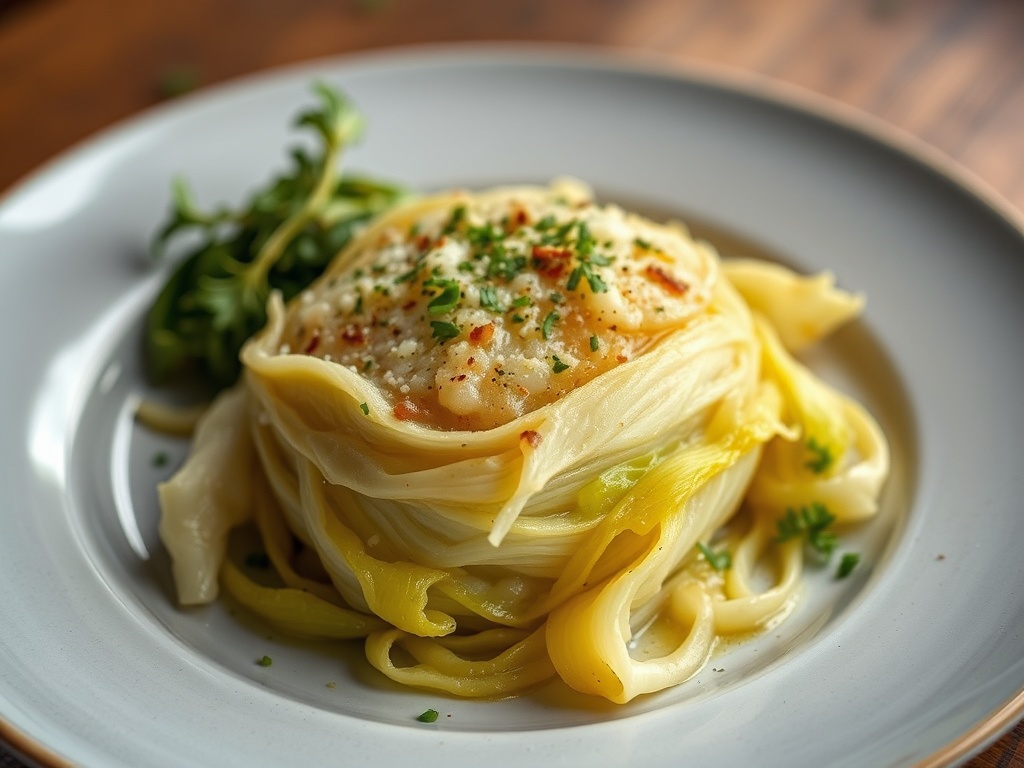
Introduction
Imagine a vegetable so tender it practically melts in your mouth, infused with the pungent warmth of garlic and the salty, umami richness of Parmesan cheese. Sound too good to be true for humble cabbage? Think again! Garlic Parmesan Melting Cabbage is the internet’s latest obsession, and for very good reason. This dish takes a surprisingly underrated vegetable and transforms it into something truly extraordinary – a side dish so flavorful and comforting, it might just steal the show from your main course. It’s a culinary revelation that proves simple ingredients, when cooked with a little love and the right technique, can yield spectacular results.
The magic of “melting cabbage” lies in its preparation. Unlike a quick stir-fry or a crunchy slaw, this recipe involves slow-cooking cabbage wedges in a savory liquid until they become incredibly soft, almost custardy, yet still hold their shape. This gentle cooking process allows the cabbage to shed its sometimes-bitter edge and develop a natural sweetness, while simultaneously absorbing all the delicious flavors around it. The addition of abundant garlic and generous amounts of freshly grated Parmesan cheese elevates this humble crucifer to gourmet status, creating a dish that is both deeply satisfying and surprisingly elegant.
What makes Garlic Parmesan Melting Cabbage truly special is its incredible versatility and universal appeal. It’s a weeknight hero, requiring minimal active cooking time, yet delivering maximum flavor. It’s budget-friendly, using readily available ingredients, and it’s a fantastic way to get even the most vegetable-averse eaters to embrace cabbage. Whether you’re looking for a comforting side, a low-carb option, or just a delicious way to enjoy more vegetables, this recipe ticks all the boxes. Get ready to discover your new favorite way to eat cabbage!
Nutritional Information
Per serving (approximate values):
- Calories: 280
- Protein: 14g
- Carbohydrates: 18g
- Fat: 19g
- Fiber: 6g
- Sodium: 650mg
Ingredients
- 1 medium head green cabbage (about 2-2.5 lbs)
- 4 tablespoons unsalted butter or olive oil
- 6-8 cloves garlic, minced or thinly sliced
- 1 cup chicken or vegetable broth
- 1/2 cup freshly grated Parmigiano-Reggiano cheese, plus more for garnish
- 1/2 teaspoon salt, or to taste
- 1/4 teaspoon black pepper, freshly ground, or to taste
- Optional: 1 tablespoon fresh parsley or chives, chopped, for garnish
- Optional: A squeeze of fresh lemon juice, for brightness
Instructions
- Prepare the Cabbage: Remove any loose or damaged outer leaves from the cabbage. Cut the cabbage in half through the core, then cut each half into 4-6 wedges, ensuring a piece of the core remains attached to each wedge to help it hold its shape. Alternatively, you can cut the cabbage into thick 1-inch slices or a rough chop if you prefer.
- Sauté Aromatics: In a large, wide skillet or Dutch oven with a tight-fitting lid, melt the butter or heat the olive oil over medium heat. Add the minced or sliced garlic and cook gently for 1-2 minutes, stirring frequently, until fragrant. Be careful not to brown the garlic, as it can become bitter.
- Sear the Cabbage (Optional but Recommended): Increase the heat to medium-high. Place the cabbage wedges (cut-side down if using wedges) in a single layer in the skillet. You may need to do this in batches if your pan isn’t large enough. Sear for 3-5 minutes per side, or until lightly golden brown and slightly caramelized. This step adds a wonderful depth of flavor.
- Add Liquid and Seasoning: Pour in the chicken or vegetable broth. Season with salt and black pepper. Bring the liquid to a gentle simmer.
- Simmer and Melt: Reduce the heat to low, cover the skillet tightly with the lid, and let the cabbage simmer for 15-25 minutes. The exact cooking time will depend on the thickness of your cabbage pieces and your desired tenderness. The cabbage should become incredibly tender, almost translucent, and “melt” when pressed with a fork, but still retain its shape.
- Incorporate Parmesan: Once the cabbage is tender, remove the lid. Stir in 1/2 cup of the freshly grated Parmigiano-Reggiano cheese. Stir gently until the cheese has melted into the broth, creating a creamy, flavorful sauce that coats the cabbage.
- Finishing Touches: Taste and adjust seasoning if needed. If desired, add a squeeze of fresh lemon juice for brightness.
- Serve: Transfer the Garlic Parmesan Melting Cabbage to a serving dish. Garnish with additional grated Parmesan cheese and fresh chopped parsley or chives, if using. Serve hot.
Cooking Tips and Variations
For the absolute best results with your Garlic Parmesan Melting Cabbage, starting with quality ingredients is paramount. Always opt for a fresh, firm head of cabbage – green cabbage is the most common and works beautifully, but savoy cabbage offers a slightly more delicate texture, and napa cabbage will cook even faster and sweeter. When selecting your Parmesan, please, please, please choose a block of authentic Parmigiano-Reggiano and grate it yourself. The pre-grated stuff simply doesn’t compare in terms of flavor, aroma, or how it melts into that luxurious sauce. Its nutty, salty, umami notes are crucial to the dish’s success. Don’t skimp on the garlic either; six to eight cloves might seem like a lot, but they mellow beautifully during the slow cooking process, infusing the cabbage with their irresistible aroma without being overpowering. Slicing some of the garlic thinly instead of just mincing can also add visual appeal and little bursts of intense flavor.
The initial searing of the cabbage, while optional, is a game-changer. This step allows the natural sugars in the cabbage to caramelize, creating a deeper, sweeter, and more complex flavor profile through the Maillard reaction. It adds a subtle smoky note that elevates the entire dish. Make sure your pan is hot enough to get a good sear, and don’t overcrowd the pan, which can steam the cabbage instead of browning it. If your skillet isn’t large enough, sear the cabbage in batches. When adding the broth, ensure it’s at least room temperature or slightly warmed to avoid shocking the pan and slowing down the cooking process. The low and slow simmer is key to achieving that “melting” texture; resist the urge to rush it with high heat, which can turn the cabbage mushy rather than tender and custardy.
Experimentation is encouraged once you’ve mastered the basic recipe! For a spicy kick, add a pinch of red pepper flakes along with the garlic. To introduce more herbaceous notes, a sprig of fresh thyme or a bay leaf can be added to the broth while simmering, then removed before serving. An extra layer of umami can be achieved with a small splash of soy sauce or Worcestershire sauce, or even a teaspoon of white miso paste dissolved in a bit of the broth before adding it to the pan. If you’re craving an even richer, creamier texture, stir in a splash of heavy cream or a tablespoon of cream cheese at the very end, along with the Parmesan. For a dairy-free version, swap the butter for olive oil, use vegetable broth, and replace the Parmigiano-Reggiano with nutritional yeast or a high-quality plant-based Parmesan substitute. A dash of apple cider vinegar or a bit more lemon juice at the end can brighten the flavors and cut through the richness. This dish is incredibly adaptable, so feel free to make it your own!
Storage and Reheating
Garlic Parmesan Melting Cabbage is one of those wonderful dishes that often tastes even better the next day, as the flavors have more time to meld and deepen. To store leftovers, allow the cabbage to cool completely to room temperature. Transfer it to an airtight container and refrigerate promptly. It will keep well in the refrigerator for up to 3-4 days. Freezing is not recommended for this dish, as the cabbage’s delicate “melted” texture can become watery and mushy upon thawing.
When reheating, the goal is to warm it through gently without overcooking or drying it out. For best results, reheat the cabbage on the stovetop. Place the desired portion in a small saucepan or skillet over medium-low heat. Add a tablespoon or two of extra broth or water to help rehydrate and create a little steam, preventing it from sticking and drying. Cover the pan and heat gently, stirring occasionally, until it’s warmed through. You can also add a tiny knob of butter or a sprinkle of fresh Parmesan during reheating to refresh the flavors. Avoid microwaving if possible, as it can sometimes lead to uneven heating and a less desirable texture, though it will work in a pinch. If using a microwave, heat in short intervals, stirring between each, until hot.
Frequently Asked Questions
What type of cabbage is best for melting cabbage?
Green cabbage is the most commonly used and works wonderfully, providing a great balance of flavor and texture when cooked down. Savoy cabbage is another excellent choice, offering a slightly more tender and delicate leaf. Napa cabbage can also be used and will cook even faster due to its softer texture and higher water content, resulting in a sweeter dish. Ultimately, any firm, fresh head of cabbage will yield delicious results with this melting technique.
Can I make this recipe dairy-free or vegan?
Absolutely! To make Garlic Parmesan Melting Cabbage dairy-free or vegan, substitute the butter with olive oil. Ensure you use vegetable broth instead of chicken broth. For the Parmesan cheese, you can use nutritional yeast, which provides a cheesy, umami flavor, or opt for a good quality plant-based Parmesan substitute that melts well. The dish will still be incredibly flavorful and satisfying.
Why is my cabbage not “melting” and staying too firm?
If your cabbage isn’t achieving that signature “melted” texture, there are a few potential reasons. First, ensure your heat is low enough once the broth is added and the lid is on. High heat will boil the cabbage, making it mushy rather than tender. Second, the cooking time might need to be extended. Cabbage sizes and thicknesses vary, so some heads might require a longer simmer (up to 25-30 minutes or even a bit more) to become truly tender. Make sure your lid is tight-fitting to trap steam, which helps cook the cabbage evenly and efficiently.
Can I add other vegetables to this dish?
While the star of the show is undeniably the melting cabbage, you can certainly add other complementary vegetables for extra flavor and nutrition. Sliced onions or shallots can be sautéed with the garlic for an added layer of aromatic sweetness. Thinly sliced carrots or bell peppers could be added to the pan along with the cabbage, though they might take slightly longer to cook. Heartier vegetables like potatoes would likely need to be par-cooked separately before being added to the pan with the cabbage to ensure even cooking.