Introduction
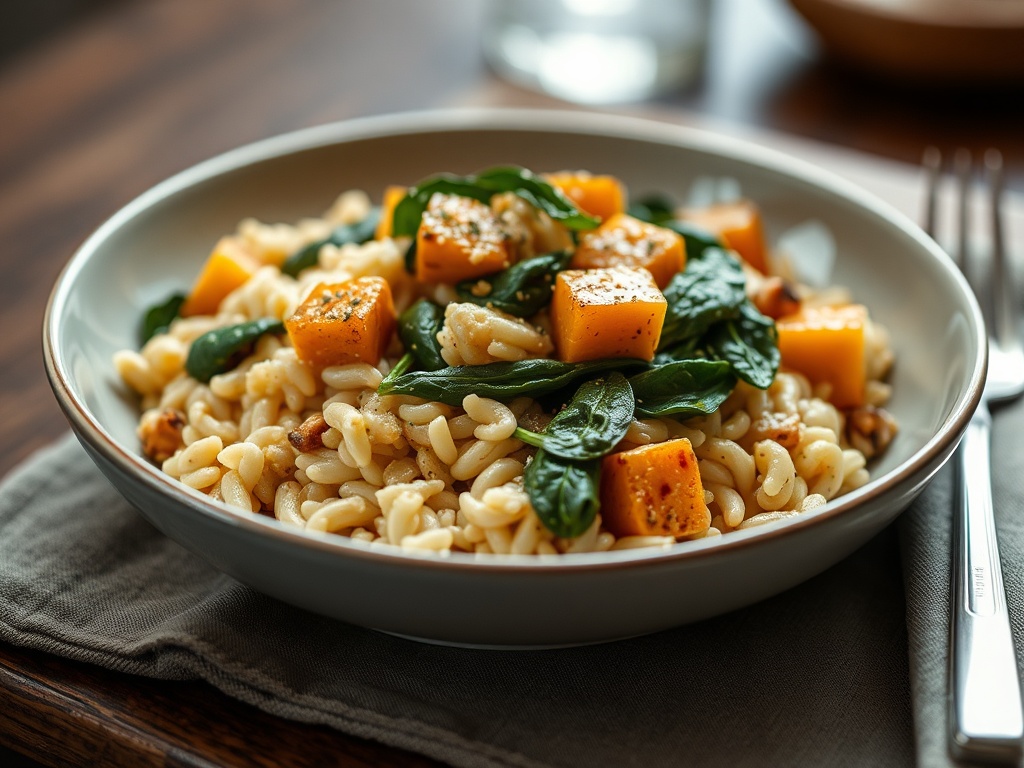
Imagine a dish that wraps you in a warm, comforting embrace, yet bursts with vibrant colors and fresh, wholesome flavors. That’s exactly what you’ll find in this creamy orzo with roasted butternut squash and spinach. This isn’t just another pasta dish; it’s a symphony of textures and tastes, where tender, rice-shaped orzo pasta luxuriates in a rich, velvety sauce, perfectly complemented by the sweet, caramelized notes of roasted butternut squash and the earthy freshness of wilted spinach. It’s a meal that feels both indulgent and incredibly nourishing, striking that perfect balance we all crave after a long day.
What makes this dish a true standout? For starters, its incredible versatility makes it a perfect fit for almost any occasion. It’s quick and satisfying enough for a bustling weeknight dinner, yet elegant enough to impress guests without hours of effort. Its seasonal appeal shines brightest in the cooler months, harnessing the natural sweetness of autumn’s bounty, but it’s easily adaptable to be enjoyed year-round. Moreover, it’s a vegetarian-friendly powerhouse, packed with a balanced profile of carbohydrates, healthy fats, and a generous medley of vegetables, making it a complete and incredibly satisfying meal on its own. For those seeking plant-based options, it transforms beautifully into a vegan delight with just a few simple swaps.
This recipe promises not only a delicious outcome but also an enjoyable cooking experience. We’ve broken down each step to ensure even novice cooks can achieve a restaurant-quality dish with ease. From perfectly roasting the squash to achieving that ideal creamy orzo texture, we’ll guide you through every stage. Prepare to transform simple, wholesome ingredients into a dish that’s bursting with flavor, visually appealing, and deeply comforting – a true celebration of seasonal eating that will quickly become a cherished favorite in your culinary repertoire.
Nutritional Information
Per serving (approximate values):
- Calories: 420
- Protein: 15g
- Carbohydrates: 60g
- Fat: 14g
- Fiber: 8g
- Sodium: 550mg
Ingredients
- 1 medium butternut squash (about 2 lbs), peeled, seeded, and cut into 1/2-inch cubes
- 2 tablespoons olive oil, divided
- 1 teaspoon salt, divided, plus more to taste
- 1/2 teaspoon black pepper, divided, plus more to taste
- 4 cloves garlic, minced
- 1 small shallot or 1/2 small yellow onion, finely diced
- 1 teaspoon dried thyme
- 1 cup orzo pasta
- 3 cups low-sodium vegetable broth, plus more if needed
- 1/2 cup milk or cream (dairy or unsweetened non-dairy such as oat or cashew milk)
- 5 ounces fresh spinach
- 1/4 cup grated Parmesan cheese (optional, for stirring in or garnish)
- 1 tablespoon fresh lemon juice (optional)
- 1/4 teaspoon red pepper flakes (optional, for a subtle kick)
Instructions
- Preheat your oven to 400°F (200°C). Line a large baking sheet with parchment paper for easy cleanup.
- Prepare the butternut squash: On the prepared baking sheet, toss the cubed butternut squash with 1 tablespoon of olive oil, 1/2 teaspoon of salt, and 1/4 teaspoon of black pepper. Spread the squash in a single layer, ensuring not to overcrowd the pan, which helps it roast rather than steam.
- Roast the squash: Place the baking sheet in the preheated oven and roast for 20-25 minutes, or until the squash is tender and slightly caramelized at the edges. Give it a gentle toss halfway through cooking. Once done, remove from the oven and set aside.
- Sauté aromatics: While the squash is roasting, heat the remaining 1 tablespoon of olive oil in a large, deep skillet or Dutch oven over medium heat. Add the diced shallot (or onion) and cook for 3-4 minutes, stirring occasionally, until softened and translucent.
- Add garlic and thyme: Stir in the minced garlic and dried thyme. Cook for another 1 minute until fragrant, being careful not to burn the garlic.
- Toast the orzo: Add the dry orzo pasta to the skillet with the aromatics. Stir continuously for 1-2 minutes, allowing the orzo to lightly toast. This step adds a subtle nutty flavor and helps prevent the pasta from becoming mushy.
- Cook the orzo: Pour in the vegetable broth. Bring the mixture to a simmer, then reduce the heat to medium-low. Cook, stirring frequently, for 10-12 minutes, or until most of the liquid has been absorbed and the orzo is al dente (still slightly firm to the bite). If the orzo absorbs all the liquid before it’s cooked through, add a splash more broth or water.
- Create creaminess: Stir in the milk or cream. Continue to cook for another 2-3 minutes, stirring, until the sauce has thickened slightly and is creamy.
- Add spinach and squash: Remove the skillet from the heat. Add the fresh spinach, a handful at a time, allowing it to wilt down into the hot orzo. Stir gently until all the spinach is fully wilted. Fold in the roasted butternut squash.
- Finish and season: If using, stir in the grated Parmesan cheese until melted and well combined. Taste the orzo and adjust seasonings with the remaining 1/2 teaspoon of salt and 1/4 teaspoon of black pepper, or more to your preference. For an extra layer of brightness, stir in the optional fresh lemon juice. If you like a little heat, add the red pepper flakes.
- Serve: Ladle the creamy orzo into bowls and serve immediately. Garnish with a sprinkle of fresh parsley or additional Parmesan cheese, if desired.
Cooking Tips and Variations
Achieving the perfect creamy texture in this orzo dish is all about timing and technique. When roasting the butternut squash, ensure your oven is fully preheated and that the squash pieces are spread in a single layer on the baking sheet. Overcrowding will steam the squash instead of caramelizing it, preventing those delicious browned edges and sweet flavor. If your baking sheet isn’t large enough, roast the squash in two batches. For easy peeling, you can microwave the whole squash for 30 seconds to 1 minute, which softens the skin slightly. When cooking the orzo, constant stirring is key, much like making risotto. This helps release the starch from the pasta, contributing to that luscious, creamy sauce. Cook the orzo to al dente; it will continue to absorb liquid and cook slightly as it rests off the heat. Always reserve some of the hot pasta water or extra broth. If your orzo becomes too thick, a splash of this reserved liquid can instantly loosen the sauce to your desired consistency without diluting the flavor.
For those looking to customize this recipe, the possibilities are endless. To make it entirely vegan, simply ensure you’re using vegetable broth, unsweetened non-dairy milk (oat or cashew milk work beautifully for creaminess), and omit the Parmesan cheese. Nutritional yeast can be stirred in at the end for a cheesy, umami flavor. If you want to boost the protein content, stir in a can of drained and rinsed chickpeas or cannellini beans along with the spinach, or serve it alongside grilled chicken, baked tofu, or Italian sausage. Experiment with different herbs: fresh sage or rosemary pair wonderfully with butternut squash, especially in autumn, while fresh basil or parsley can add a lighter, fresher note. For a touch of acidity and brightness, a squeeze of fresh lemon juice at the end is a game-changer. You can also add other vegetables; roasted Brussels sprouts or mushrooms would be fantastic additions, or even some sun-dried tomatoes for a burst of concentrated flavor. Don’t be afraid to adjust the level of sweetness or spice; a drizzle of maple syrup with the squash or an extra pinch of red pepper flakes can transform the dish to your liking.
Storage and Reheating
This creamy orzo with roasted butternut squash and spinach is delicious freshly made, but it also makes for wonderful leftovers. To store, allow the orzo to cool completely to room temperature before transferring it to an airtight container. It can be refrigerated for up to 3-4 days. It’s important to note that orzo, like most pasta dishes, will continue to absorb liquid as it sits, so the texture will become thicker and less saucy over time.
When reheating, the best method is to gently warm it on the stovetop over medium-low heat. Add a splash of vegetable broth, water, or milk (dairy or non-dairy) to the pan as you reheat, stirring frequently. This will help to rehydrate the orzo and bring the sauce back to its creamy consistency. Start with a tablespoon or two of liquid and add more as needed until it reaches your desired texture. You can also reheat individual portions in the microwave. Place the orzo in a microwave-safe bowl, add a tablespoon or two of liquid, and cover loosely. Heat in 30-60 second intervals, stirring in between, until heated through. Be careful not to overheat, as this can make the orzo dry or mushy. While freezing is possible, it’s generally not recommended for creamy pasta dishes like this, as the texture can become grainy upon thawing and reheating. It’s best enjoyed within a few days of preparation.
Frequently Asked Questions
How can I make this dish even creamier?
To achieve an extra luscious and creamy texture, you can increase the amount of milk or cream slightly, or use a higher-fat dairy option like heavy cream. Another excellent tip is to reserve about 1/2 cup of the starchy pasta cooking water before draining the orzo (if cooking separately, though this recipe cooks it risotto-style). If your sauce seems too thick at the end, slowly stir in a tablespoon or two of this reserved water to loosen it up and add body without diluting the flavor. For a vegan option, a swirl of cashew cream (blended soaked cashews with water) or full-fat coconut milk (from a can) can provide an incredibly rich and decadent finish.
Can I prepare parts of this recipe in advance for meal prep?
Absolutely! This recipe is fantastic for meal prepping. You can roast the butternut squash ahead of time and store it in an airtight container in the refrigerator for up to 3-4 days. This significantly cuts down on active cooking time when you’re ready to make the dish. You can also dice your shallots/onions and mince your garlic in advance. While the orzo itself is best cooked fresh to achieve the ideal creamy texture, having the squash prepped makes assembly much quicker. If you cook the entire dish ahead, note that the orzo will absorb more liquid over time, so you’ll need to add extra broth or milk when reheating, as described in the storage section.
What are some good substitutions if I don’t have butternut squash?
If butternut squash isn’t available or you prefer a different vegetable, there are several delicious substitutes. Other winter squashes like kabocha or acorn squash would work well, offering similar sweet, earthy flavors when roasted. For a more seasonal twist, sweet potatoes are an excellent alternative, providing a similar texture and sweetness. In the spring or summer, you could use roasted asparagus, zucchini, or even cherry tomatoes for a lighter, brighter flavor profile. Just be mindful of cooking times for different vegetables; softer vegetables will roast more quickly than dense squash.