Introduction
Who doesn’t love a warm, chewy cookie straight from the oven? That irresistible aroma, the comforting sweetness – it’s a nostalgic pleasure that brightens any day. But let’s be honest, traditional cookies often come with a side of guilt, loaded with refined sugars and unhealthy fats that leave us feeling sluggish rather than satisfied. The good news? You absolutely can have your cookie and eat it too, without compromising your wellness goals. Welcome to the world of healthy cookies, where indulgence meets nutrition in the most delicious way possible.
This recipe isn’t just about cutting calories; it’s about making smarter choices that nourish your body while still delivering that coveted cookie experience. We’ll be swapping out problematic ingredients for wholesome alternatives, transforming a sometimes-guilty pleasure into a genuinely beneficial treat. Imagine biting into a cookie that’s rich in fiber, packed with healthy fats, and naturally sweetened, all without sacrificing an ounce of flavor or texture. This isn’t a compromise; it’s an upgrade. Get ready to bake a batch of cookies that you can feel truly good about enjoying.
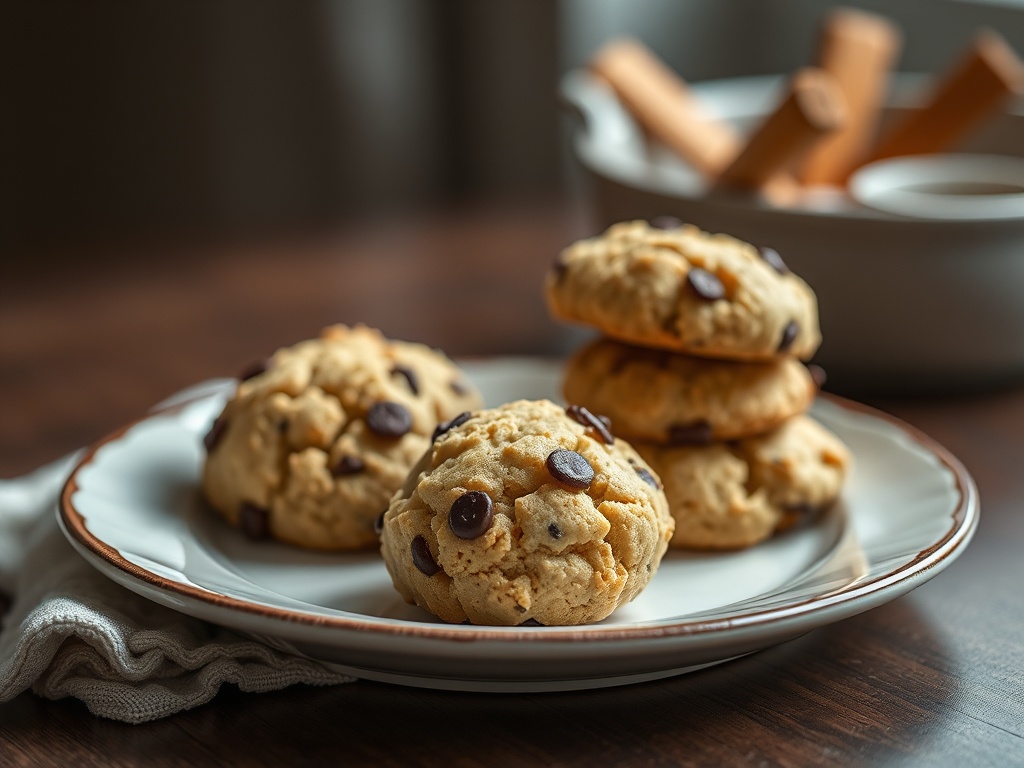
Our focus today is on creating a batch of “Almond Butter Chocolate Chip Delights” – a cookie that’s incredibly easy to make, adaptable to various dietary needs, and so satisfying you’ll forget it’s good for you. This recipe promises a soft, chewy texture, a rich nutty flavor, and bursts of chocolatey goodness, proving that healthy baking can be just as exciting, if not more so, than its traditional counterparts. Get ready to redefine your cookie cravings!
Nutritional Information
Per serving (approximate values for 1 cookie):
- Calories: 165
- Protein: 5g
- Carbohydrates: 18g
- Fat: 10g
- Fiber: 3g
- Sodium: 85mg
Ingredients
- 1 cup (240g) creamy almond butter (unsweetened, natural)
- 1/2 cup (120ml) maple syrup (pure, Grade A)
- 1 large egg (at room temperature)
- 1 teaspoon vanilla extract
- 1/2 teaspoon baking soda
- 1/4 teaspoon sea salt
- 1/2 cup (85g) dark chocolate chips (70% cacao or higher)
- Optional: 1/4 cup (25g) rolled oats (for added texture and fiber)
Instructions
- Preheat your oven to 350°F (175°C). Line a baking sheet with parchment paper.
- In a large mixing bowl, combine the almond butter and maple syrup. Stir well with a spoon or whisk until thoroughly combined and smooth.
- Add the room temperature egg and vanilla extract to the almond butter mixture. Mix again until everything is fully incorporated and the mixture is uniform.
- Sprinkle the baking soda and sea salt over the wet ingredients. Mix until just combined. Be careful not to overmix at this stage.
- Gently fold in the dark chocolate chips until they are evenly distributed throughout the dough. If using, fold in the rolled oats as well.
- Using a tablespoon or a small cookie scoop, drop rounded spoonfuls of dough onto the prepared baking sheet, leaving about 2 inches between each cookie. The dough will be soft.
- Slightly flatten each cookie mound with the back of a spoon or your fingers. These cookies don’t spread much, so shaping them now will give you a better final product.
- Bake for 9-12 minutes, or until the edges are lightly golden brown and the centers are just set. The cookies may still look a little soft in the middle, but they will firm up as they cool.
- Remove the baking sheet from the oven and let the cookies cool on the sheet for 5-10 minutes. This is crucial as they are delicate when warm.
- Carefully transfer the cooled cookies to a wire rack to cool completely. Enjoy your healthy, delicious almond butter chocolate chip delights!
Cooking Tips and Variations
Achieving the perfect healthy cookie often comes down to a few key techniques and a willingness to experiment. First, ensure your almond butter is natural and unsweetened. The oil sometimes separates in natural almond butter, so give it a good stir before measuring to ensure a consistent texture in your dough. Room temperature egg is important as it emulsifies better with the fats, leading to a smoother, more uniform dough. Don’t overmix the dough once the dry ingredients are added; over-mixing can develop gluten and lead to tougher cookies, even with gluten-free flours or nut butters. For the best results, mix until just combined. When placing the dough on the baking sheet, remember these cookies don’t spread much, so gently flattening them before baking helps create a more traditional cookie shape and ensures even cooking. Finally, the cooling process on the baking sheet is non-negotiable; they are very delicate when hot and need that time to set up properly before moving to a wire rack.
The beauty of healthy cookies lies in their adaptability. Let’s explore some delicious variations. For a different flavor profile, swap out almond butter for cashew butter or sunflower seed butter (for a nut-free option). Just be mindful that sunflower seed butter can sometimes react with baking soda to create a green hue, which is harmless but can be surprising! If you prefer a less sweet cookie, you can slightly reduce the maple syrup by 1-2 tablespoons, but don’t reduce it too much as it also contributes to the cookie’s moisture and texture. For an extra boost of protein and healthy fats, consider adding a tablespoon of chia seeds or ground flaxseed to the dough. These also act as additional binders.
Texture adjustments are also easy to achieve. If you like a chewier cookie, you can add a quarter cup of rolled oats, as suggested in the recipe, or even a tablespoon of unsweetened shredded coconut. For a slightly crispier edge, bake them for an extra minute or two, keeping a close eye to prevent burning. Remember that different ovens can vary, so always trust your senses. When it comes to flavor profiles, the possibilities are endless. Instead of just chocolate chips, try adding chopped walnuts or pecans for a nutty crunch. Dried cranberries or chopped apricots can introduce a lovely tartness and chew. Spices like a pinch of cinnamon, nutmeg, or even a tiny amount of cardamom can elevate the flavor significantly. For a double chocolate delight, substitute 1-2 tablespoons of the almond butter with unsweetened cocoa powder, adjusting the maple syrup slightly if the dough becomes too dry. Always start with small additions when experimenting; you can always add more, but you can’t take it away.
Dietary adaptations make this recipe even more versatile. To make these cookies vegan, simply replace the large egg with a “flax egg” (1 tablespoon ground flaxseed mixed with 3 tablespoons water, allowed to sit for 5 minutes until gelled). This works wonderfully as a binder in this recipe. Since the recipe is already gluten-free due to the absence of traditional flour, it’s perfect for those with gluten sensitivities. For a nut-free version, as mentioned, sunflower seed butter is an excellent alternative, or you could explore tahini for a more unique, savory-sweet profile, though you might need to adjust the sweetener slightly to balance the tahini’s bitterness. Always ensure your chocolate chips are dairy-free if catering to strict vegan diets. The key is to understand the function of each ingredient and find a suitable replacement that maintains the desired texture and flavor. Don’t be afraid to keep a baking journal to track your successful variations and notes; it’s a fantastic way to refine your healthy baking skills and discover your new favorite cookie combinations.
Storage and Reheating
Proper storage is key to keeping your healthy cookies fresh and delicious for as long as possible. Once your Almond Butter Chocolate Chip Delights have cooled completely on the wire rack, transfer them to an airtight container. At room temperature, these cookies will stay fresh for up to 3-4 days. For optimal freshness and to extend their shelf life, you can store them in the refrigerator for up to a week. The texture might become slightly firmer when chilled, but they’re still wonderfully chewy. If you want to enjoy these cookies over a longer period, freezing is an excellent option. Place the completely cooled cookies in a single layer on a baking sheet and freeze for about an hour until solid. Then, transfer them to a freezer-safe airtight container or a heavy-duty freezer bag, separating layers with parchment paper to prevent sticking. Frozen cookies will keep well for up to 2-3 months. Label your containers with the date to keep track.
Reheating healthy cookies is simple and can revive some of that fresh-baked warmth. If your cookies are at room temperature or refrigerated, you can gently warm them in the microwave for 10-15 seconds for a soft, gooey center. Be careful not to overheat, as this can make them tough. Alternatively, you can place them on a baking sheet and warm them in a preheated oven at 300°F (150°C) for 3-5 minutes, which helps crisp up the edges slightly. For frozen cookies, you can either let them thaw at room temperature for about 30 minutes to an hour, or you can warm them directly from frozen in a preheated oven at 300°F (150°C) for 5-8 minutes, or until warmed through. This method works particularly well for restoring a freshly baked texture. Avoid reheating frozen cookies directly in the microwave for too long, as it can result in uneven heating and a rubbery texture.
Frequently Asked Questions
Can I use a different type of sweetener?
While maple syrup is recommended for its flavor and liquid consistency, you can experiment with other liquid sweeteners like honey or agave nectar. Keep in mind that honey has a stronger flavor profile and agave is slightly sweeter, so you might need to adjust the amount slightly to taste. Granulated sweeteners like coconut sugar or erythritol would likely change the texture significantly, as they don’t provide the same moisture content, and would require additional liquid to compensate, so they are not recommended as a direct substitute without further recipe modifications.
Why did my cookies not spread?
There are several reasons cookies might not spread. Firstly, these specific cookies are designed to be thicker and chewier and naturally don’t spread as much as traditional flour-based cookies. This is why the instruction to slightly flatten them before baking is important. Other factors could be that your almond butter was too thick or not natural (some processed almond butters are stiffer), or your egg was too cold, which can hinder proper emulsification. Ensure your ingredients are at room temperature and your almond butter is well-stirred and creamy.
Are these cookies suitable for a low-carb diet?
While these cookies are healthier than traditional versions, they are not strictly low-carb due to the maple syrup and natural sugars in the almond butter. Maple syrup is a natural sugar, and while it has a lower glycemic index than refined sugar, it still contributes carbohydrates. For a truly low-carb option, you would need to replace the maple syrup with a keto-friendly liquid sweetener like allulose or a monk fruit/erythritol blend, and ensure your chocolate chips are sugar-free. This would require specific adjustments to the recipe to maintain texture and sweetness balance.