Introduction
There are few dishes that evoke the same sense of warmth, comfort, and home as a classic pot roast. The mere mention of it conjures images of cozy Sunday dinners, rich aromas wafting from the kitchen, and a promise of a deeply satisfying meal. This isn’t just a dish; it’s an experience, a culinary embrace that nourishes both body and soul, especially when the weather turns crisp and you crave something truly hearty.
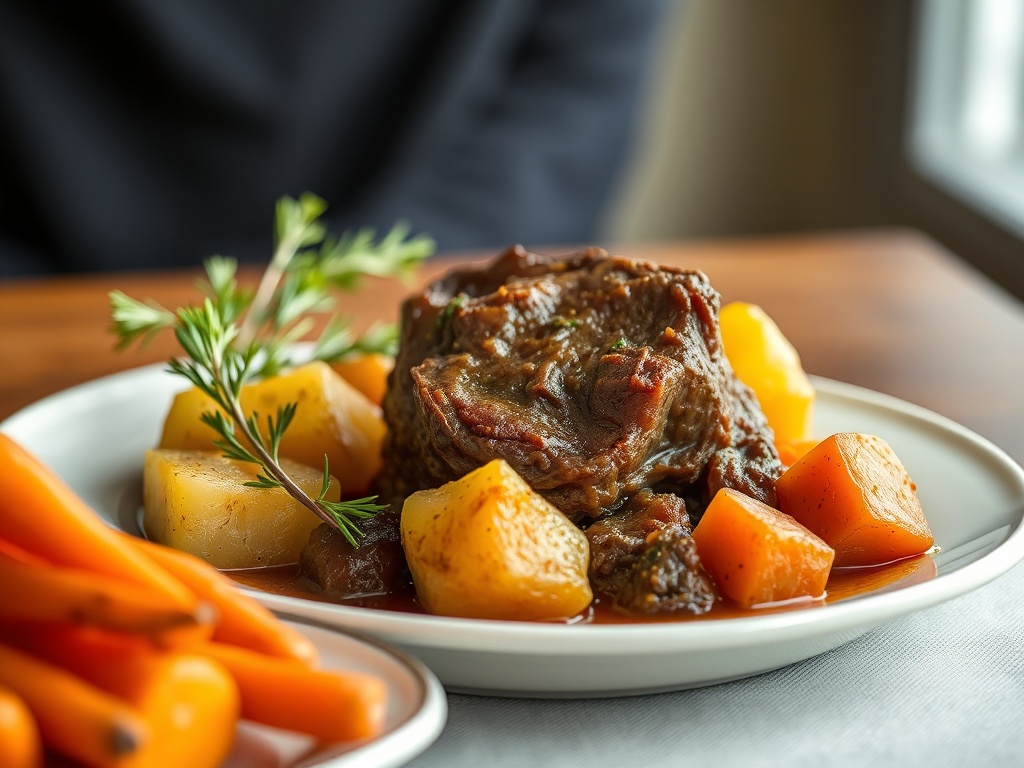
Our recipe for Hearty One-Pot Wonder: Classic Pot Roast with Tender Potatoes and Carrots delivers on that promise, offering a complete, flavorful meal cooked entirely in one pot. It’s a testament to the magic of low and slow cooking, transforming humble ingredients into something extraordinary. Imagine succulent, fall-apart beef, perfectly tender potatoes, and sweet, earthy carrots, all bathed in a rich, savory gravy. This isn’t just a meal; it’s a celebration of simple, wholesome cooking that yields spectacular results.
Whether you’re a seasoned home cook or just starting your culinary journey, this recipe is designed for success. It’s forgiving, incredibly flavorful, and perfect for feeding a crowd or enjoying comforting leftovers throughout the week. We’ll guide you through every step, ensuring that your pot roast is melt-in-your-mouth tender, packed with deep, savory notes, and destined to become a beloved family favorite.
Nutritional Information
Per serving (approximate values):
- Calories: 650
- Protein: 55g
- Carbohydrates: 40g
- Fat: 30g
- Fiber: 6g
- Sodium: 850mg
Ingredients
- 3-4 pounds boneless beef chuck roast
- 2 tablespoons olive oil, divided
- 1.5 teaspoons salt, divided, plus more to taste
- 1 teaspoon black pepper, divided, plus more to taste
- 1 large yellow onion, chopped (about 1.5 cups)
- 4 cloves garlic, minced
- 1 cup dry red wine (such as Cabernet Sauvignon or Merlot), optional but recommended
- 3 cups low-sodium beef broth
- 1 tablespoon Worcestershire sauce
- 1 teaspoon dried thyme
- 2 bay leaves
- 2 pounds Yukon Gold potatoes, peeled and cut into 1.5-inch chunks
- 1 pound carrots, peeled and cut into 1.5-inch pieces
- 2 tablespoons all-purpose flour or cornstarch (for gravy, optional)
- 2 tablespoons cold water (for gravy, optional)
- Fresh parsley, chopped, for garnish (optional)
Instructions
- Prepare the Meat: Pat the chuck roast very dry with paper towels. Season generously all over with 1 teaspoon salt and 0.5 teaspoon black pepper.
- Sear the Roast: Heat 1 tablespoon of olive oil in a large (6-7 quart) Dutch oven or heavy-bottomed pot with a lid over medium-high heat until shimmering. Carefully place the seasoned roast in the hot oil and sear on all sides until deeply browned, about 3-5 minutes per side. This step is crucial for developing rich flavor. Remove the roast from the pot and set aside.
- Sauté Aromatics: Reduce the heat to medium. Add the remaining 1 tablespoon of olive oil to the pot. Add the chopped onion and cook, stirring occasionally, until softened and lightly browned, about 5-7 minutes. Add the minced garlic and cook for another minute until fragrant.
- Deglaze the Pot: Pour in the red wine (if using). Use a wooden spoon to scrape up any browned bits from the bottom of the pot. Let the wine simmer and reduce by about half, about 3-5 minutes. If not using wine, skip this step and proceed to add beef broth.
- Add Liquids and Seasonings: Stir in the beef broth, Worcestershire sauce, dried thyme, and bay leaves. Bring the mixture to a gentle simmer.
- Return Roast to Pot: Carefully place the seared chuck roast back into the pot, ensuring it’s mostly submerged in the liquid. If needed, add a little more beef broth to ensure the liquid comes about two-thirds of the way up the sides of the roast.
- Slow Cook (Oven Method): Cover the Dutch oven tightly with its lid. Transfer to a preheated oven at 325°F (160°C) and cook for 2 hours.
- Add Vegetables: After 2 hours, carefully remove the pot from the oven. Add the cubed potatoes and carrots around the roast. Stir gently to ensure they are somewhat submerged in the liquid. Re-cover the pot and return to the oven for another 1 to 1.5 hours, or until the meat is fork-tender and the vegetables are tender. The total cooking time will be 3 to 3.5 hours.
- Check for Tenderness: The pot roast is done when it can be easily shredded with a fork.
- Rest and Prepare Gravy (Optional): Carefully remove the roast, potatoes, and carrots from the pot and place them on a serving platter. Tent loosely with foil and let the meat rest for 10-15 minutes. This allows the juices to redistribute, resulting in a more tender and flavorful roast.
- Make Gravy: While the roast rests, remove the bay leaves from the pot. In a small bowl, whisk together the flour (or cornstarch) and cold water until smooth to create a slurry. Bring the pan juices in the Dutch oven to a simmer over medium heat. Slowly whisk in the slurry, a little at a time, until the gravy reaches your desired thickness. Continue to simmer, stirring frequently, for 2-3 minutes to cook out any raw flour taste. Taste and adjust seasoning with salt and pepper if needed.
- Serve: Shred or slice the rested pot roast. Serve immediately with the tender potatoes, carrots, and plenty of rich gravy. Garnish with fresh parsley if desired.
Cooking Tips and Variations
For the most flavorful pot roast, do not skip the searing step. Browning the meat caramelizes its surface, creating a depth of flavor known as the Maillard reaction, which is essential to a rich pot roast. Ensure your pot is hot enough and don’t overcrowd the pan; sear in batches if necessary.
When selecting potatoes, waxy or medium-starch varieties like Yukon Golds or red bliss are preferred over starchy russets. Russets tend to break down and become mushy during the long cooking process, while Yukon Golds hold their shape beautifully and absorb all the delicious flavors of the pot roast.
If you don’t have red wine on hand, you can substitute it with an equal amount of beef broth, or even a dark beer for a different flavor profile. The wine adds a wonderful complexity and acidity that helps tenderize the meat and brighten the overall taste, but it’s not strictly essential for a delicious result.
For a deeper, more herbaceous flavor, consider tying a few sprigs of fresh rosemary or sage with kitchen twine and adding them to the pot along with the thyme and bay leaves. Remove them before serving. You can also add other root vegetables like parsnips or celery along with the carrots for more variety.
Slow Cooker Method: After searing the meat and sautéing the aromatics, transfer everything to a large slow cooker. Cook on low for 6-8 hours or on high for 3-4 hours. Add the potatoes and carrots during the last 2-3 hours of cooking on low, or the last 1.5-2 hours on high. Thicken the juices with a slurry at the end, if desired.
Instant Pot Method: Use the “Sauté” function to sear the meat and sauté the aromatics. Deglaze with wine/broth. Add the roast, broth, Worcestershire, thyme, and bay leaves. Close the lid and set to “Manual” or “Pressure Cook” on high for 60 minutes for a 3-pound roast (add 10-15 minutes for a 4-pound roast). Allow for a natural pressure release for 15 minutes, then quick release any remaining pressure. Remove the roast, add the potatoes and carrots, and cook on high pressure for another 5-7 minutes with a quick release. Thicken juices as desired.
Storage and Reheating
Leftover pot roast is a true culinary gift, often tasting even better the next day as the flavors have more time to meld and deepen. To store, allow the pot roast, potatoes, carrots, and gravy to cool completely. Transfer them to an airtight container and refrigerate for up to 3-4 days. For longer storage, you can freeze individual portions in freezer-safe containers for up to 2-3 months. When freezing, it’s often best to separate the meat and vegetables from the gravy if possible, as some vegetables can become a bit mushier after thawing.
To reheat, the best method depends on how much you’re reheating. For individual portions, gently reheat in the microwave until warmed through, stirring occasionally. For larger amounts, transfer the pot roast and vegetables with gravy to a Dutch oven or oven-safe dish. Cover tightly with foil and reheat in a preheated oven at 300°F (150°C) for 20-30 minutes, or until heated through. You may need to add a splash of beef broth or water to thin the gravy if it has thickened too much in the refrigerator. Avoid overheating, as this can dry out the meat.
Leftover pot roast is incredibly versatile! Shredded meat can be used in sandwiches, tacos, quesadillas, or even a quick pot pie. The vegetables can be mashed or added to a hash. Don’t let a single delicious bite go to waste!
Frequently Asked Questions
What cut of beef is best for pot roast?
The best cut for pot roast is typically a boneless beef chuck roast, also known as chuck eye, chuck roll, or shoulder roast. This cut comes from the shoulder of the cow, which is a well-used muscle, making it tougher but also rich in connective tissue and marbling. These elements break down beautifully during long, slow cooking, resulting in incredibly tender, flavorful, and moist meat.
Why is my pot roast not tender?
If your pot roast isn’t tender, the most common reason is that it hasn’t cooked long enough. Tough cuts of meat like chuck roast require ample time at a low temperature for the collagen and connective tissues to break down into gelatin, which is what makes the meat fork-tender and succulent. Don’t rush the process; if it’s still tough, simply keep cooking it, checking every 30 minutes, until it reaches the desired tenderness. Ensure there’s enough liquid in the pot to prevent it from drying out.
Can I make this pot roast ahead of time?
Absolutely! Pot roast is an excellent make-ahead meal. In fact, many people find that the flavors deepen and improve overnight, making it even more delicious the next day. Prepare the pot roast as directed, let it cool, and then refrigerate it in an airtight container. When you’re ready to serve, gently reheat it on the stovetop over low heat or in the oven at 300°F (150°C) until warmed through. This makes it perfect for entertaining or busy weeknights.
How do I prevent my vegetables from getting mushy?
To prevent your potatoes and carrots from becoming mushy, it’s crucial to add them during the last phase of cooking, not at the very beginning. For this recipe, we add them after the roast has cooked for 2 hours, allowing them to cook for the remaining 1 to 1.5 hours. This timing ensures they become tender but still hold their shape and offer a pleasant texture contrast to the meat. Cutting them into uniform, larger chunks (around 1.5 inches) also helps them maintain their integrity.
Conclusion
There’s an undeniable magic in a perfectly executed pot roast, a dish that transcends mere sustenance to become a cherished memory. This Hearty One-Pot Wonder: Classic Pot Roast with Tender Potatoes and Carrots is more than just a meal; it’s an invitation to gather, to share, and to savor the simple pleasures of good food made with love. The rich, savory aroma that fills your home, the anticipation of that first tender bite, and the comforting warmth it brings are all part of its enduring appeal.
We encourage you to embrace the process, trust in the low and slow method, and allow yourself the joy of creating this culinary masterpiece. Whether it’s a Sunday supper, a special occasion, or just a desire for ultimate comfort, this pot roast will deliver every time. It’s a testament to how simple ingredients, given time and care, can transform into something truly extraordinary.
Now, go forth and create your own pot roast legend! We’d love to hear about your experience – share your photos, comments, and any personal touches you add. This classic dish is waiting to become your next family favorite, bringing comfort, tradition, and deliciousness to your table for years to come.