Instructions
- Prepare Your Pans and Preheat Oven: Preheat your oven to 350°F (175°C). Grease and flour two 8-inch round cake pans, or line the bottoms with parchment paper.
- Combine Dry Ingredients: In a large mixing bowl, whisk together the all-purpose flour, rolled oats, baking soda, baking powder, cinnamon, nutmeg, ginger, cloves, and salt. Set aside.
- Combine Wet Ingredients: In a separate large bowl, whisk together the granulated sugar, brown sugar, eggs, vegetable oil, and vanilla extract until well combined and smooth.
- Combine Wet and Dry: Gradually add the dry ingredients to the wet ingredients, mixing on low speed or by hand until just combined. Be careful not to overmix; a few streaks of flour are fine.
- Fold in Carrots, Apples, and Nuts: Gently fold in the grated carrots, grated apples, chopped walnuts or pecans, and optional raisins or dried cranberries. Mix until evenly distributed.
- Divide and Bake: Divide the batter evenly between the two prepared cake pans. Bake for 30-35 minutes, or until a wooden skewer inserted into the center of the cakes comes out clean.
- Cool the Cakes: Remove the cakes from the oven and let them cool in the pans for 10-15 minutes. Then, invert the cakes onto a wire rack to cool completely. Ensure the cakes are entirely cool before frosting, otherwise, the frosting will melt.
- Prepare the Cream Cheese Frosting: In a large mixing bowl, using an electric mixer, beat the softened cream cheese and softened butter together on medium speed until smooth and creamy, about 2-3 minutes.
- Add Powdered Sugar: Gradually add the sifted powdered sugar, one cup at a time, beating on low speed until incorporated, then increasing to medium speed until fluffy.
- Add Vanilla and Adjust Consistency: Beat in the vanilla extract. If the frosting is too thick, add milk or heavy cream one tablespoon at a time until you reach your desired spreading consistency.
- Assemble the Cake: Once the cakes are completely cool, place one cake layer on your serving plate or cake stand. Spread about one-third of the cream cheese frosting evenly over the top of the first layer.
- Add Second Layer and Frost: Carefully place the second cake layer on top. Use the remaining frosting to cover the top and sides of the entire cake, smoothing it with an offset spatula or knife.
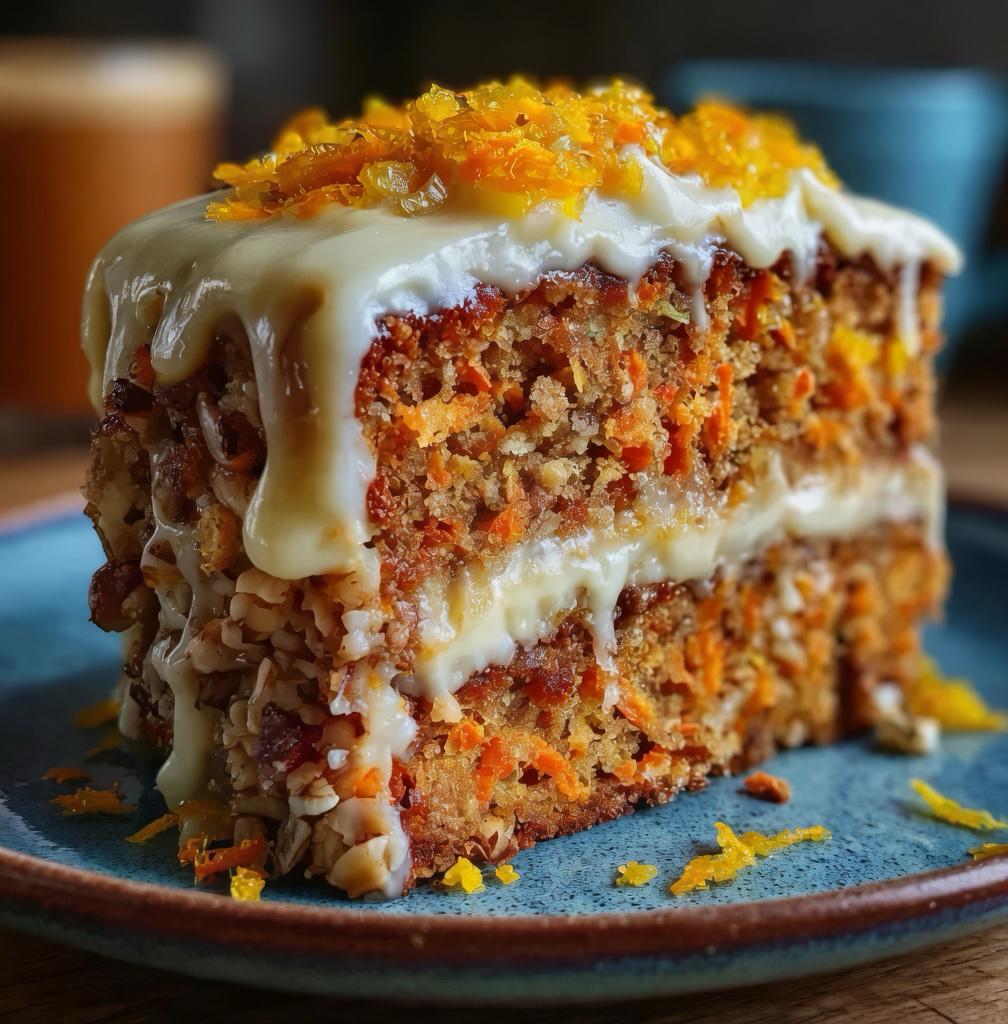
- Garnish the Cake: Gently press chopped walnuts or pecans onto the sides of the frosted cake. Sprinkle the finely chopped candied orange peel or orange zest over the top of the cake for a beautiful finish.
- Chill and Serve: For best results, chill the cake in the refrigerator for at least 30 minutes to allow the frosting to set before slicing and serving. Enjoy!
Cooking Tips and Variations
Moisture is Key: For the most incredibly moist cake, use freshly grated carrots and apples. Do not squeeze out any liquid from them; that moisture is essential for the cake’s tender crumb. Using a food processor with a grating attachment can make this step quick and easy.
Room Temperature Ingredients for Frosting: Always ensure your cream cheese and butter are at room temperature when making the frosting. This is crucial for achieving a smooth, lump-free, and creamy consistency. Cold ingredients will result in a clumpy frosting.
Don’t Overmix the Batter: Once you add the dry ingredients to the wet, mix only until just combined. Overmixing develops the gluten in the flour, which can lead to a tough, dry cake. A few small streaks of flour are preferable to an overmixed batter.
Cool Cakes Completely: This cannot be stressed enough! Attempting to frost warm or even slightly warm cakes will result in a melted, runny mess of frosting. Patience is a virtue here; allow your cake layers to cool completely on a wire rack before applying any frosting.
Toasting Nuts for Enhanced Flavor: For an extra layer of flavor and crunch, lightly toast your chopped walnuts or pecans before adding them to the batter or using them as garnish. Spread them on a baking sheet and bake at 300°F (150°C) for 5-7 minutes, watching carefully to prevent burning.
Spice It Up (or Down): The spice blend in this recipe is perfectly balanced, but feel free to adjust to your preference. If you love a stronger ginger kick, add a bit more. If you prefer less clove, reduce it. A pinch of cardamom can also add a delightful, exotic note.
Even Cake Layers: To ensure your cake layers bake evenly, use a kitchen scale to divide the batter equally between your two cake pans. If your cakes dome slightly, you can level them with a serrated knife once completely cool for a flatter surface to frost.
Homemade Candied Orange Peel: While store-bought candied orange peel is convenient, making your own is a rewarding process. Simply boil orange peels (blanched a few times to reduce bitterness), then simmer them in a sugar syrup until translucent. Dry and chop for garnish.
Variations:
- Nut-Free: Omit the nuts entirely or substitute with pumpkin seeds or sunflower seeds if allergies are a concern.
- Different Fruits: While apple is fantastic, you could experiment with grated zucchini (ensure it’s well-drained) for an even moister cake, or finely diced pineapple.
- Boozy Kick: Add a tablespoon or two of rum, brandy, or orange liqueur to the cake batter or the frosting for an adult twist.
- Gluten-Free: Substitute the all-purpose flour with a 1:1 gluten-free baking blend that contains xanthan gum. Ensure your oats are certified gluten-free.
- Mini Cakes or Cupcakes: This recipe can easily be adapted for cupcakes or mini cakes. Adjust baking time accordingly (cupcakes typically bake for 20-25 minutes).
- Cream Cheese Frosting Alternatives: If you’re not a fan of cream cheese frosting, a simple butter cream or even a lemon glaze would also complement this cake beautifully.
Storage and Reheating
Storing the Cake: Due to the cream cheese frosting, this cake must be stored in the refrigerator. Place the cake in an airtight container or cover it loosely with plastic wrap to prevent it from drying out or absorbing odors from other foods in the fridge. It will keep well for up to 3-4 days.
Serving from the Refrigerator: For the best flavor and texture, remove the cake from the refrigerator about 30-60 minutes before serving. This allows the cake layers to soften slightly and the frosting to become less firm, bringing out all the wonderful flavors and aromas. Serving it directly from the fridge might make the cake feel a bit dense and the frosting too firm.
Freezing the Cake (Frosted): You can freeze the entire frosted cake or individual slices. To freeze the whole cake, place it uncovered in the freezer for about an hour until the frosting is firm. Then, wrap it tightly in several layers of plastic wrap, followed by a layer of aluminum foil. For slices, wrap each slice individually in plastic wrap and then foil. Frozen frosted cake will last for up to 1 month. Thaw overnight in the refrigerator before bringing to room temperature to serve.
Freezing the Cake (Unfrosted Layers): If you want to bake ahead, you can freeze the unfrosted cake layers. Once completely cooled, wrap each layer tightly in plastic wrap, then in aluminum foil. Place them in a freezer-safe bag or container. Unfrosted layers can be stored in the freezer for up to 2-3 months. When ready to use, thaw them overnight in the refrigerator, then bring to room temperature before frosting and assembling.
Reheating: This cake is typically enjoyed at room temperature, so reheating is not usually necessary. If you prefer a slightly warm slice (perhaps without frosting, or if you’re serving it plain), you could gently warm a slice in the microwave for 10-15 seconds. However, be cautious as this can alter the texture of the cake and melt the frosting significantly. Generally, it’s best enjoyed as is, after allowing it to come to room temperature.
Frequently Asked Questions
What kind of oats should I use for this recipe?
You should use old-fashioned rolled oats for this recipe, not instant or quick-cooking oats. Rolled oats provide a better texture and don’t become mushy during baking, contributing to the wholesome chewiness of the cake. Instant oats are too finely processed and will absorb liquid too quickly, potentially altering the cake’s consistency.
Can I make this cake ahead of time for a party?
Absolutely! This cake is an excellent make-ahead dessert. You can bake the cake layers up to 2 days in advance, wrap them well, and store them at room temperature. The cream cheese frosting can also be made a day in advance and stored in the refrigerator; just bring it to room temperature and re-whip briefly before frosting. Once assembled and frosted, the cake will stay fresh and delicious in the refrigerator for 3-4 days, making it perfect for entertaining.
My cream cheese frosting is too runny/too stiff, what should I do?
If your cream cheese frosting is too runny, it’s often because the butter or cream cheese was too warm, or too much liquid (milk/cream) was added. You can try adding more sifted powdered sugar, a tablespoon at a time, until it thickens. Alternatively, chilling the frosting in the refrigerator for 20-30 minutes can help it firm up. If it’s too stiff, add milk or heavy cream, one teaspoon at a time, beating after each addition until you reach the desired smooth, spreadable consistency.
Can I substitute a different fruit for the apples?
While apples are fantastic for their moisture and subtle sweetness, you can experiment with other fruits. Grated zucchini, well-drained, works wonderfully for added moisture. Finely diced pineapple (drained) can also be a delightful addition, bringing a tropical twist. Just be mindful of the moisture content of any substitute; if it’s very watery, you might need to pat it dry slightly to avoid a soggy cake.