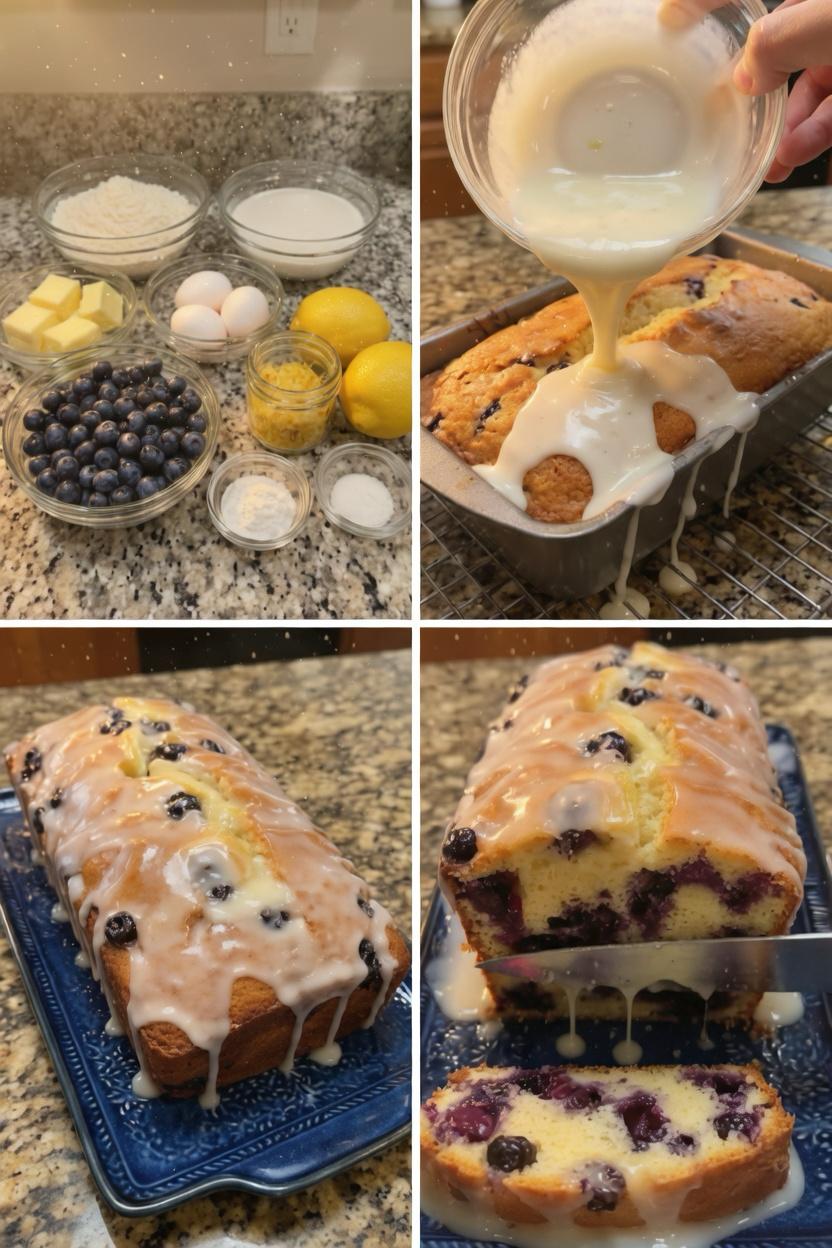
Instructions
- Preheat and Prepare: Preheat your oven to 350°F (175°C). Grease and flour a 9×5 inch loaf pan. You can also line the bottom with parchment paper, leaving an overhang for easy removal.
- Cream Butter and Sugar: In a large mixing bowl, cream together the softened butter and granulated sugar until light and fluffy. This step is crucial for creating a tender cake, so take your time and scrape down the sides of the bowl as needed.
- Add Eggs: Beat in the eggs one at a time, making sure each egg is fully incorporated before adding the next. Add the lemon zest, lemon juice, and vanilla extract. Mix until well combined.
- Combine Dry Ingredients: In a separate bowl, whisk together the flour, baking powder, baking soda, and salt. This ensures that the leavening agents are evenly distributed throughout the flour.
- Alternate Wet and Dry Ingredients: Gradually add the dry ingredients to the wet ingredients, alternating with the buttermilk. Begin and end with the dry ingredients. Mix until just combined. Be careful not to overmix, as this can result in a tough cake.
- Fold in Blueberries: Gently fold in the fresh blueberries. To prevent them from sinking to the bottom of the cake, toss them with a tablespoon or two of flour before adding them to the batter.
- Pour into Pan: Pour the batter into the prepared loaf pan and spread evenly.
- Bake: Bake for 60-70 minutes, or until a toothpick inserted into the center comes out clean or with a few moist crumbs.
- Cool: Let the cake cool in the pan for 10-15 minutes before inverting it onto a wire rack to cool completely.
- Prepare the Glaze: While the cake is cooling, prepare the lemon glaze. In a medium bowl, whisk together the powdered sugar, lemon juice, and lemon zest (if using) until smooth. Add more lemon juice for a thinner glaze or more powdered sugar for a thicker glaze.
- Glaze the Cake: Once the cake is completely cool, drizzle the lemon glaze over the top. Let the glaze set for a few minutes before slicing and serving.
Cooking Tips and Variations
- Preventing Sunken Blueberries: As mentioned in the instructions, tossing the blueberries in flour before adding them to the batter is essential to prevent them from sinking to the bottom. The flour helps to create a barrier that keeps the blueberries suspended throughout the cake.
- Checking for Doneness: The toothpick test is the best way to check for doneness. If the toothpick comes out clean or with a few moist crumbs, the cake is done. If it comes out with wet batter, continue baking for a few more minutes and check again.
- Cooling is Key: Allowing the cake to cool in the pan for a short period before inverting it onto a wire rack is important to prevent it from sticking and breaking. Make sure the cake is completely cool before glazing, as the glaze will melt if the cake is still warm.
- Room Temperature Ingredients: Using room temperature ingredients, especially butter and eggs, is crucial for proper emulsification. Room temperature butter creams more easily with sugar, creating a light and fluffy batter. Room temperature eggs also incorporate more easily into the batter, resulting in a smoother texture.
- Don’t Overmix: Overmixing the batter can develop the gluten in the flour, resulting in a tough cake. Mix the wet and dry ingredients until just combined, and be gentle when folding in the blueberries.
Variations:
- Other Berries: Feel free to substitute or add other berries, such as raspberries, blackberries, or strawberries. A mixed berry pound cake can be just as delicious.
- Nuts: Adding chopped nuts, such as pecans or walnuts, can add a nice crunch and nutty flavor to the cake. Toast the nuts before adding them to the batter for an even more intense flavor.
- Citrus Zest: Experiment with different citrus zests, such as orange or grapefruit, to create a unique flavor profile.
- Poppy Seeds: Add 2-3 tablespoons of poppy seeds to the batter for a subtle nutty flavor and a pleasant texture.
- Lemon Extract: For an even more intense lemon flavor, add 1/2 teaspoon of lemon extract to the batter.
Storage and Reheating
Storage: To store the Lemon Blueberry Pound Cake, wrap it tightly in plastic wrap or store it in an airtight container at room temperature. It will stay fresh for up to 3-4 days. You can also store it in the refrigerator for up to a week, but keep in mind that the cake may become slightly drier. For longer storage, you can freeze the cake. Wrap it tightly in plastic wrap and then in aluminum foil, or store it in a freezer-safe container. It can be frozen for up to 2-3 months. Thaw the cake in the refrigerator overnight before serving.
Reheating: While this cake is delicious at room temperature, you can also warm it up slightly before serving. To reheat, wrap a slice of cake in foil and bake in a preheated oven at 350°F (175°C) for 5-10 minutes, or until warmed through. You can also microwave a slice of cake for 15-20 seconds. Be careful not to overheat the cake, as it can become dry.
The cake is delicious on its own, but it can be elevated with complimentary toppings. Serve with a dollop of whipped cream, a scoop of vanilla ice cream, or a side of fresh berries. A dusting of powdered sugar can also add a touch of elegance.
Frequently Asked Questions
Why did my blueberries sink to the bottom of the cake?
Blueberries tend to sink to the bottom of the cake if the batter is too thin or the blueberries are too heavy. Tossing the blueberries in flour before adding them to the batter helps to prevent this. Also, make sure your butter and sugar are creamed well to create a light and airy batter.
Can I use frozen blueberries instead of fresh?
Yes, you can use frozen blueberries, but keep in mind that they may bleed into the batter more than fresh blueberries. Do not thaw the blueberries before using them. Toss them in flour while they are still frozen and gently fold them into the batter. Using frozen blueberries may result in a slightly more purple-tinged cake.
My cake is dry. What did I do wrong?
A dry cake can be caused by several factors, including overbaking, using too much flour, or not enough liquid. Be sure to measure your flour accurately (spoon it into the measuring cup and level it off) and don’t overbake the cake. Also, make sure your oven temperature is accurate. Using room temperature ingredients is crucial for moisture.
Can I make this cake gluten-free?
Yes, you can make this cake gluten-free by substituting the all-purpose flour with a gluten-free all-purpose flour blend. Be sure to use a blend that contains xanthan gum, as this will help to bind the ingredients together and create a cake with a good texture. You may need to adjust the amount of liquid slightly, as gluten-free flours can absorb more moisture. Start with the amount of buttermilk called for in the recipe and add more if the batter seems too thick.