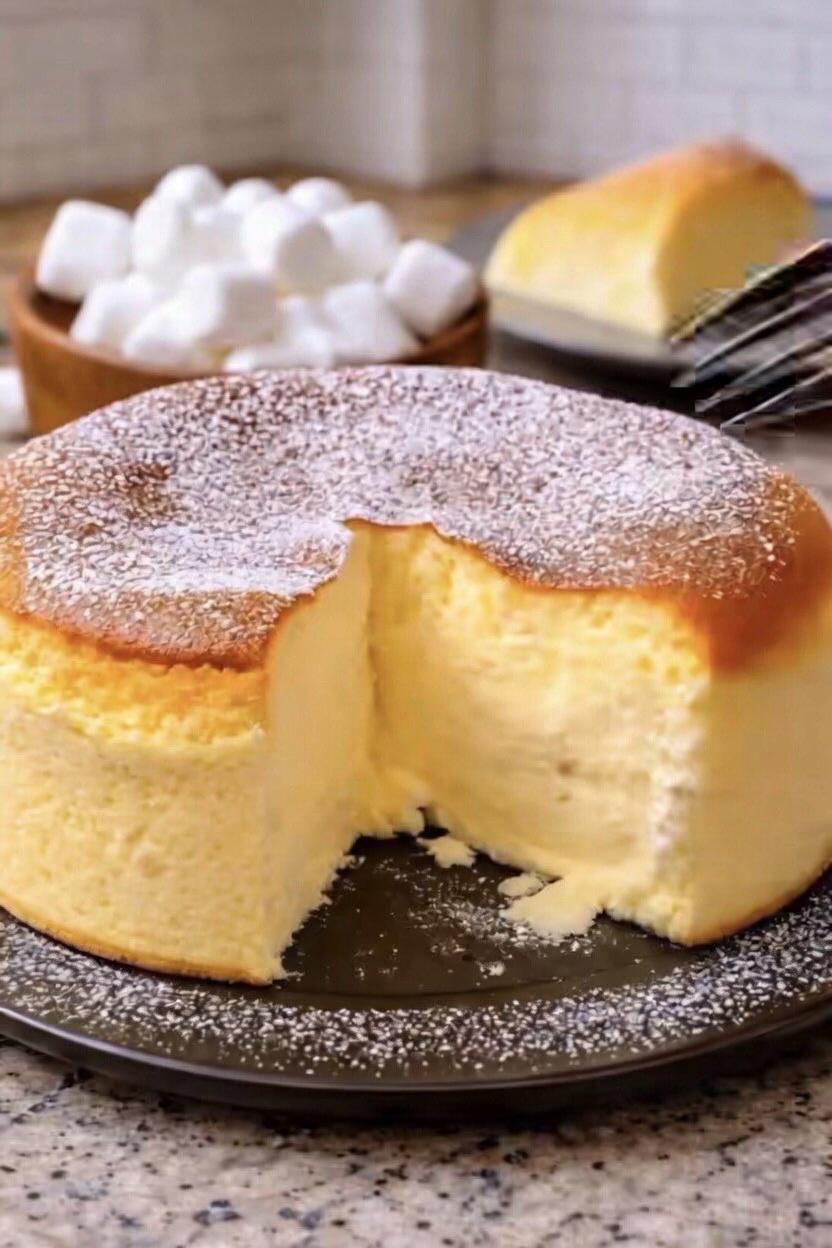
Instructions
- Prepare Your Pan: Preheat your oven to 160°C (325°F). Grease an 8-inch (20cm) springform pan. Line the bottom with parchment paper, and also line the sides with parchment paper, allowing it to extend about 2 inches above the rim of the pan. This extra height will help the cheesecake rise without sticking and prevent cracks. Wrap the outside of the springform pan securely with two layers of heavy-duty aluminum foil to prevent water from seeping in during the water bath.
- Create the Cream Cheese Base: In a heatproof bowl, combine the softened cream cheese, softened butter, and milk. Set this bowl over a saucepan of simmering water (creating a double boiler, or bain-marie), ensuring the bottom of the bowl does not touch the water. Stir constantly until the mixture is smooth, melted, and lump-free. Remove from heat.
- Add Egg Yolks and Flavor: Whisk in the 40g of granulated sugar into the warm cream cheese mixture until fully dissolved. Add the egg yolks one at a time, whisking well after each addition until fully incorporated and the mixture is smooth and glossy. Stir in the vanilla extract.
- Incorporate Dry Ingredients: Sift the all-purpose flour and cornstarch directly into the cream cheese-yolk mixture. Whisk gently until just combined and no lumps remain. Be careful not to overmix, as this can develop gluten and make the cheesecake tough. Set aside.
- Whip the Egg Whites: In a separate, very clean, large bowl, add the egg whites and a pinch of salt. If using, add the cream of tartar. Using an electric mixer, begin whisking the egg whites on medium speed until foamy. Gradually add the remaining 40g of granulated sugar, one tablespoon at a time, while continuing to whisk. Increase the speed to medium-high and whip until stiff, glossy peaks form. The meringue should hold its shape when the whisk is lifted, but not be dry or crumbly.
- Gently Fold the Meringue: Add about one-third of the whipped egg whites to the cream cheese mixture. Using a rubber spatula, gently fold it in to lighten the batter. This step helps to equalize the densities of the two mixtures.
- Combine the Batters: Pour the lightened cream cheese mixture into the bowl with the remaining whipped egg whites. Gently fold them together using a cut-and-fold technique. Be very careful not to deflate the air from the egg whites. Continue folding until just combined and no streaks of egg white remain. The batter should be light and airy.
- Prepare for Water Bath Baking: Pour the cheesecake batter into the prepared springform pan. Gently tap the pan on the counter a few times to release any large air bubbles.
- Bake in a Water Bath: Place the foil-wrapped springform pan into a larger roasting pan. Carefully pour hot water into the roasting pan until it reaches about halfway up the sides of the springform pan.
- Baking Process: Carefully transfer the roasting pan with the cheesecake to the preheated oven. Bake for 60-70 minutes, or until the top is golden brown and the cheesecake is set but still slightly jiggly in the center when gently shaken. To check for doneness, you can insert a thin skewer into the center; it should come out mostly clean with a few moist crumbs.
- Slow Cooling (Crucial Step): Once baked, turn off the oven but leave the oven door ajar (prop it open with a wooden spoon) for at least 1 hour. This slow cooling prevents the cheesecake from rapidly deflating or cracking due to a sudden temperature change.
- Final Cooling and Chilling: After 1 hour in the oven, remove the cheesecake from the oven and carefully lift it out of the water bath. Remove the aluminum foil. Let it cool completely on a wire rack at room temperature. Once fully cooled, cover the cheesecake loosely with plastic wrap and refrigerate for at least 4 hours, or preferably overnight, before serving. This chilling time is essential for the cheesecake to fully set and for its flavors to meld.
- Serve: Once chilled, carefully remove the springform pan sides and parchment paper. Dust with powdered sugar, if desired, just before serving. Slice with a warm, sharp knife for clean cuts.
Cooking Tips and Variations
Achieving the perfect Japanese Soufflé Cheesecake is all about precision and patience. Here are some key tips to ensure your success, along with delightful variations to explore.
Tips for Soufflé Cheesecake Success
- Room Temperature Ingredients are Non-Negotiable: Ensure your cream cheese, butter, milk, and eggs are all at room temperature. This is crucial for smooth emulsification of the cream cheese base and for the egg whites to whip up properly, resulting in a uniform, lump-free batter. Cold ingredients will lead to a lumpy base and a denser cake.
- Don’t Overmix the Batter: After adding the flour and cornstarch to the cream cheese mixture, mix only until just combined. Overmixing at this stage can develop the gluten in the flour, leading to a tough and rubbery cheesecake instead of a delicate, melt-in-your-mouth texture.
- Gentle Folding is Key: The air incorporated into the whipped egg whites is the secret to the cheesecake’s soufflé-like texture. When folding the meringue into the cream cheese batter, use a light, upward motion with your spatula, cutting through the center and folding over. Work quickly but gently to preserve as much air as possible. Any aggressive mixing will deflate the meringue, resulting in a dense cake.
- The Importance of the Water Bath (Bain-Marie): Baking in a water bath provides a moist, even heat environment, which is vital for preventing the cheesecake from cracking and drying out. It ensures slow, gentle cooking, allowing the cake to rise evenly and maintain its delicate structure. Make sure the water level in the roasting pan is at least halfway up the side of your springform pan throughout baking.
- Seal Your Springform Pan Thoroughly: Wrap the outside of your springform pan with at least two layers of heavy-duty aluminum foil. This creates a waterproof barrier, preventing any water from the bath from seeping into your cheesecake and making it soggy.
- Resist Opening the Oven Door: During the initial baking phase, avoid opening the oven door. Sudden temperature drops can cause the cheesecake to deflate prematurely. Only open it when instructed for the slow cooling phase.
- Patience During Cooling: This is one of the most critical steps. Rapid cooling is a primary cause of cracks and severe deflation. The slow cooling process, first in the turned-off oven with the door ajar, then at room temperature, and finally in the refrigerator, allows the cheesecake to gradually set and stabilize, maintaining its beautiful structure.
- Parchment Paper is Your Friend: Lining the bottom and sides of your springform pan with parchment paper, extending above the rim, makes for effortless removal of the delicate cheesecake and helps it rise without sticking.
Variations
- Lemon Zest: For a bright, zesty twist, add 1-2 teaspoons of finely grated lemon zest to the cream cheese mixture along with the vanilla extract. The citrus notes beautifully complement the creamy base.
- Matcha Green Tea: Infuse your cheesecake with a distinctly Japanese flavor by adding 1-2 tablespoons of high-quality matcha powder (sifted) with the flour and cornstarch. This will give your cheesecake a beautiful green hue and an earthy, slightly bitter undertone.
- Vanilla Bean: For a more intense vanilla flavor, scrape the seeds from half a vanilla bean and add them to the cream cheese mixture instead of, or in addition to, the vanilla extract.
- Chocolate Swirl: Melt 50g (about 1/4 cup) of good quality dark chocolate. After pouring the batter into the pan, drizzle the melted chocolate over the top and swirl gently with a skewer or knife for a marbled effect.
- Fruit Puree: Incorporate a small amount (about 1/4 cup) of strained fruit puree (like raspberry or strawberry) into the cream cheese mixture for a subtle fruit flavor and a hint of color.
Storage and Reheating
Proper storage is key to preserving the delicate texture and flavor of your Japanese Soufflé Cheesecake. While it’s best enjoyed fresh, it can be stored for a few days.
Storage
- Refrigeration: The Japanese Soufflé Cheesecake must be stored in the refrigerator. Once completely cooled, place it in an airtight container to prevent it from absorbing odors from other foods and to keep it from drying out. It will maintain its best quality for 3-4 days in the refrigerator.
- Freezing (Not Recommended for Best Texture): While technically you can freeze cheesecake, it’s generally not recommended for Japanese Soufflé Cheesecake. The delicate, airy texture can become compromised upon thawing, often becoming denser and losing its signature jiggly quality. If you must freeze, wrap individual slices tightly in plastic wrap, then in aluminum foil, and place in an airtight freezer-safe container for up to 1 month. Thaw overnight in the refrigerator.
Reheating (Optional)
Japanese Soufflé Cheesecake is traditionally served chilled or at room temperature. Reheating is generally not necessary or recommended, as it can alter the delicate texture. However, if you prefer a slightly warmer, “fresh-baked” feel, you can gently warm individual slices:
- Microwave (Use Caution): Place a slice on a microwave-safe plate. Microwave on low power for 10-15 seconds, just until slightly warmed through. Be very careful not to overheat, as this will quickly turn the cake rubbery.
- Oven (Gentle Warmth): Place a slice on a baking sheet. Warm in a preheated oven at a very low temperature (around 100°C / 200°F) for 5-7 minutes. This method is less likely to damage the texture than a microwave, but still risks drying it out if overdone.
For the best experience, simply let a chilled slice sit at room temperature for 15-20 minutes before serving to allow the flavors to open up slightly, or enjoy it directly from the fridge.
Frequently Asked Questions
Why did my Japanese Soufflé Cheesecake crack on top?
Cracking is a common issue and usually occurs due to rapid changes in temperature or overbaking. Ensure you bake the cheesecake in a water bath, as this provides a moist, even cooking environment. Most importantly, follow the slow cooling process: turn off the oven and leave the door ajar for at least an hour after baking, then cool completely at room temperature before refrigerating. This gradual cooling prevents the surface from shrinking too quickly and cracking.
My cheesecake deflated a lot after baking. What went wrong?
Deflation is typically caused by insufficient whipping of the egg whites (not reaching stiff peaks), overmixing the batter after incorporating the egg whites (which deflates the air), or removing the cheesecake from the oven too quickly. Ensure your meringue is stable and glossy, fold gently, and always allow the cheesecake to cool slowly in the oven with the door ajar before bringing it out.
Why is my Japanese Soufflé Cheesecake dense instead of light and airy?
A dense texture is usually a result of deflated egg whites. This can happen if the egg whites weren’t whipped to stiff peaks, if they were overmixed (which breaks down the air bubbles), or if they were folded too vigorously into the cream cheese base. Another factor could be overmixing the cream cheese mixture after adding the flour, which develops gluten and makes the cake tough. Always use room temperature ingredients, whip egg whites correctly, and fold gently.
Can I make this cheesecake without a springform pan?
While a springform pan is ideal for easy removal and presentation, you can use a regular round cake pan. You’ll need to line the entire pan (bottom and sides) with parchment paper, leaving an overhang to help lift the cheesecake out once cooled. However, be aware that removing the delicate cheesecake from a regular pan can be more challenging and risks damaging its structure.