Instructions
- Combine Dry Ingredients: In a large bowl, whisk together the gluten-free flour blend, baking powder, salt, and sugar. Make sure the gluten-free flour blend contains xanthan gum, or add 1/2 teaspoon of xanthan gum separately.
- Add Wet Ingredients: In a separate bowl, combine the warm water, olive oil, and yogurt. Whisk well to combine.
- Mix the Dough: Gradually add the wet ingredients to the dry ingredients, mixing with a wooden spoon or your hands until a dough forms. The dough will be slightly sticky, which is normal for gluten-free dough.
- Knead the Dough: Turn the dough out onto a lightly floured surface (use gluten-free flour). Knead for about 3-5 minutes until the dough becomes smoother and more elastic. Add a little more flour if the dough is too sticky to handle.
- Rest the Dough: Place the dough in a lightly oiled bowl, turning to coat. Cover the bowl with plastic wrap or a clean kitchen towel and let it rest in a warm place for at least 30 minutes, or up to an hour. This allows the dough to hydrate and the flavors to develop.
- Divide the Dough: After resting, gently punch down the dough and divide it into 6-8 equal portions.
- Shape the Naan: On a lightly floured surface, roll each portion of dough into an oval or teardrop shape, about ¼ inch thick.
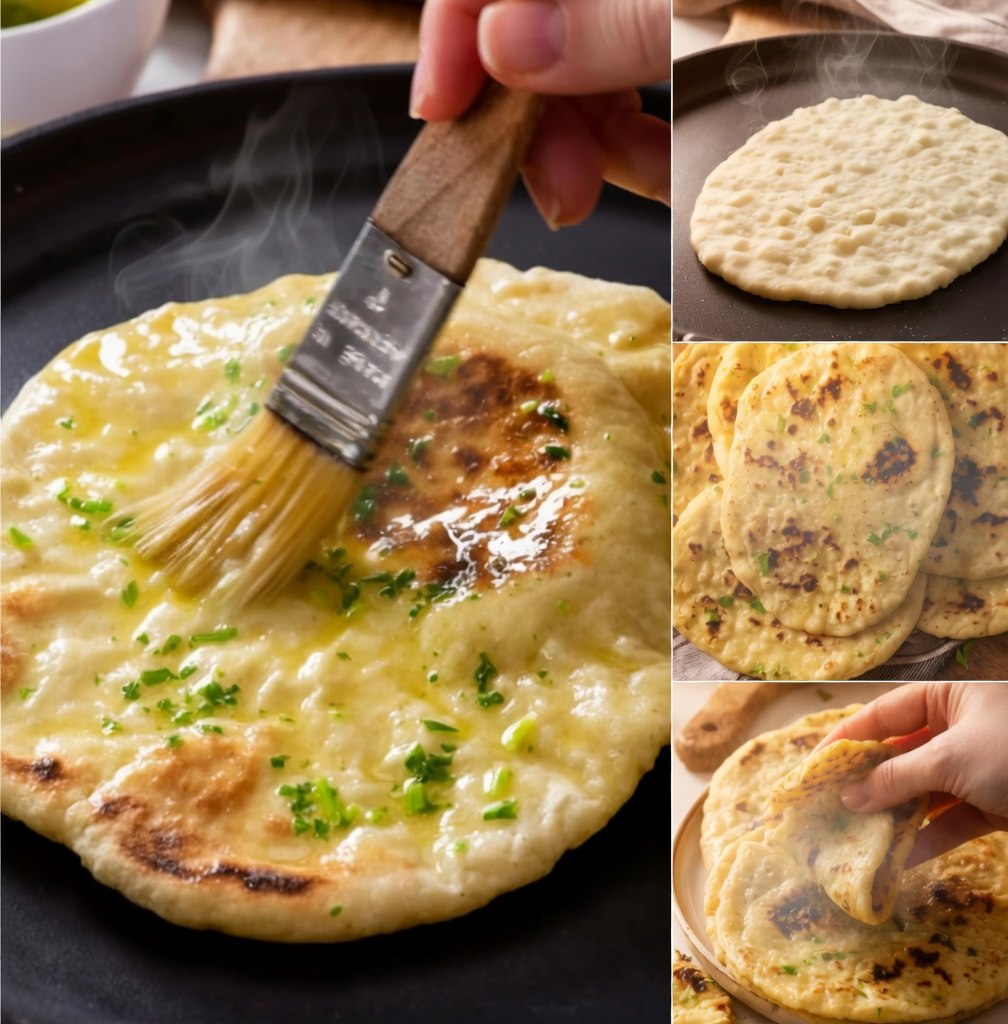
- Heat the Skillet: Heat a cast iron skillet or griddle over medium-high heat until it is very hot. A hot skillet is essential for achieving the characteristic naan bubbles.
- Cook the Naan: Carefully place one or two naan onto the hot skillet. Cook for 2-3 minutes per side, or until golden brown and bubbly. Watch carefully to prevent burning. The naan should puff up and develop some char marks.
- Brush with Butter/Ghee and Garnish: Remove the naan from the skillet and immediately brush with melted butter or ghee. Sprinkle with fresh cilantro or parsley.
- Serve Immediately: Serve the gluten-free naan warm with your favorite curries, dips, or grilled meats.
- Repeat: Repeat steps 7-10 with the remaining dough.
Cooking Tips and Variations
- Flour Blend Matters: The success of this recipe depends heavily on the gluten-free flour blend you use. A blend specifically designed for baking, containing a mix of rice flour, tapioca starch, and potato starch, will yield the best results. Make sure it contains xanthan gum.
- Yogurt Substitute: If you are dairy-free, you can substitute the yogurt with a dairy-free yogurt alternative, such as coconut yogurt or almond yogurt.
- Add Garlic: For garlic naan, add 1-2 cloves of minced garlic to the dough along with the wet ingredients.
- Add Nigella Seeds: Sprinkle nigella seeds (kalonji) on the naan before cooking for added flavor and visual appeal.
- Herb Infusion: Instead of sprinkling fresh herbs after cooking, you can knead finely chopped herbs (such as cilantro, parsley, or mint) directly into the dough for a more intense flavor.
- Spice it Up: Add a pinch of red pepper flakes or a dash of garam masala to the dough for a subtle kick.
- Cooking Method: While a cast iron skillet is recommended, you can also use a regular non-stick skillet or a griddle. The key is to ensure the surface is hot enough to create the bubbles and char marks.
- Prevent Sticking: If the naan is sticking to the skillet, try lightly greasing the skillet with oil or ghee before cooking.
- Heat Control: Adjust the heat as needed to prevent the naan from burning. If the naan is browning too quickly, reduce the heat slightly.
- Dough Consistency: Gluten-free dough can be tricky to work with. If the dough is too wet, add a little more gluten-free flour, one tablespoon at a time, until it reaches a manageable consistency. If the dough is too dry, add a little more water, one teaspoon at a time.
- Make it Vegan: Substitute the yogurt with a plant-based yogurt alternative and use olive oil or vegan butter for brushing.
Storage and Reheating
- Storage: Store leftover gluten-free naan in an airtight container at room temperature for up to 2 days or in the refrigerator for up to 5 days. To prevent the naan from drying out, wrap it tightly in plastic wrap or store it in a zip-top bag.
- Reheating: To reheat, you can use several methods:
- Skillet: Reheat the naan in a dry skillet over medium heat for 1-2 minutes per side, or until warmed through.
- Oven: Wrap the naan in foil and reheat in a preheated oven at 350°F (175°C) for 5-10 minutes, or until warmed through.
- Microwave: Reheat the naan in the microwave for 10-20 seconds, but be careful not to overheat it, as it can become tough.
- Freezing: Gluten-free naan can be frozen for up to 2 months. Wrap the naan tightly in plastic wrap and then place it in a freezer-safe bag or container. To thaw, let it sit at room temperature for about 30 minutes or reheat directly from frozen using the methods described above.
Frequently Asked Questions
Can I use a different gluten-free flour blend?
While this recipe is designed to work with a specific gluten-free all-purpose blend (containing xanthan gum and a mix of rice flour, tapioca starch, and potato starch), you can experiment with other blends. However, be aware that the results may vary. You might need to adjust the amount of liquid or flour depending on the specific blend you use. Look for blends that are specifically formulated for baking yeast breads.
Why is my naan not puffing up?
Several factors can contribute to naan not puffing up. First, ensure that your skillet or griddle is hot enough. The high heat is essential for creating steam, which causes the naan to puff up. Second, make sure your baking powder is fresh. Expired baking powder will not provide enough leavening. Finally, avoid over-kneading the dough, as this can develop too much structure and prevent it from puffing up properly. A good rest time is sufficient for gluten-free breads.
Can I make this recipe without yogurt?
Yes, you can omit the yogurt or substitute it with a dairy-free alternative such as plain coconut yogurt or almond yogurt. The yogurt adds a slight tang and helps to tenderize the dough, but it is not essential. If omitting the yogurt, you may need to add a tablespoon or two of extra water to achieve the desired dough consistency.
My naan is too sticky to handle. What should I do?
Gluten-free dough can be naturally stickier than traditional wheat-based dough. If your dough is too sticky to handle, try adding a little more gluten-free flour, one tablespoon at a time, until it reaches a manageable consistency. Be careful not to add too much flour, as this can make the naan dry and dense. Lightly flouring your hands and the work surface can also help to prevent the dough from sticking.