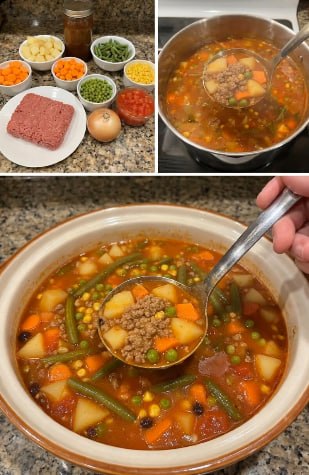
Instructions
- Brown the Ground Beef: Heat olive oil in a large pot or Dutch oven over medium-high heat. Add the ground beef and cook, breaking it up with a spoon, until browned. Drain off any excess fat. Don’t overcrowd the pan; brown in batches if necessary for best results.
- Sauté the Onion: Add the diced onion to the pot with the browned beef. Cook until the onion is softened and translucent, about 5 minutes.
- Add Vegetables and Tomatoes: Add the diced carrots, potatoes, diced tomatoes (undrained), green beans, corn, and peas to the pot.
- Pour in the Broth: Pour the beef broth over the vegetables and beef.
- Season and Simmer: Add salt, pepper, and Italian seasoning (if using). Bring the soup to a boil, then reduce heat to low, cover, and simmer for at least 30 minutes, or up to 45 minutes, or until the potatoes and carrots are tender. The longer it simmers, the more the flavors will meld together.
- Taste and Adjust: Taste the soup and adjust seasoning as needed. Add more salt, pepper, or Italian seasoning to your preference.
- Serve: Ladle the soup into bowls and serve hot. Garnish with fresh parsley or a dollop of sour cream, if desired.
Cooking Tips and Variations
Here are some tips and variations to help you customize your Easy Vegetable Beef Soup and make it even easier!
- Make it Even Easier: Use pre-cut vegetables to save time on preparation. Many grocery stores offer pre-diced carrots, onions, and potatoes.
- Vary the Vegetables: Feel free to substitute or add other vegetables to your liking. Celery, zucchini, mushrooms, or bell peppers would all be great additions. You can also use fresh vegetables instead of frozen, just adjust the cooking time accordingly.
- Add Pasta or Rice: For a heartier soup, add a cup of cooked pasta (such as macaroni or ditalini) or cooked rice during the last 15 minutes of simmering.
- Add Beans: Add a can of drained and rinsed kidney beans, pinto beans, or cannellini beans for extra protein and fiber.
- Spice it Up: Add a pinch of red pepper flakes or a dash of hot sauce for a little heat.
- Change the Meat: While this recipe calls for ground beef, you can also use ground turkey, ground sausage, or even leftover cooked beef, cut into small pieces.
- Thicken the Soup: If you prefer a thicker soup, you can create a slurry by mixing 1 tablespoon of cornstarch with 2 tablespoons of cold water. Stir the slurry into the soup during the last 10 minutes of simmering. Alternatively, mash some of the potatoes against the side of the pot to thicken the broth naturally.
- Thin the Soup: If the soup is too thick, add more beef broth until you reach your desired consistency.
- Slow Cooker Version: To make this soup in a slow cooker, brown the ground beef in a skillet first. Then, transfer the browned beef to the slow cooker along with the onions, carrots, potatoes, diced tomatoes, green beans, corn, peas, beef broth, and seasonings. Cook on low for 6-8 hours or on high for 3-4 hours, or until the vegetables are tender.
- Broth Quality: Using a high-quality beef broth can significantly enhance the flavor of your soup. If you have homemade beef stock, that would be even better! Low-sodium broth allows you to control the salt level.
- Seasoning is Key: Taste the soup throughout the cooking process and adjust the seasonings as needed. A little extra salt, pepper, or Italian seasoning can make a big difference.
- Make it a Day Ahead: Soup often tastes even better the next day as the flavors meld together. Making it a day in advance is a great way to save time and enhance the flavor.
- Browning the Beef: Ensure the ground beef is nicely browned for a richer flavor. Don’t overcrowd the pan; brown in batches if necessary. Drain off any excess grease after browning.
- Vegetable Prep: Cut the vegetables into uniform sizes to ensure they cook evenly.
Storage and Reheating
Here’s how to properly store and reheat your leftover Easy Vegetable Beef Soup:
- Storage: Allow the soup to cool completely before transferring it to an airtight container. Store in the refrigerator for up to 3-4 days.
- Freezing: This soup freezes very well. Transfer the cooled soup to freezer-safe containers or freezer bags. Be sure to leave some space at the top of the container to allow for expansion during freezing. The soup can be frozen for up to 2-3 months.
- Thawing: Thaw the frozen soup in the refrigerator overnight. For a quicker thaw, you can place the freezer bag or container in a bowl of cold water, changing the water every 30 minutes.
- Reheating: To reheat the soup, pour it into a pot and heat over medium heat, stirring occasionally, until heated through. You can also reheat individual portions in the microwave.
- Reheating Frozen Soup: If reheating directly from frozen, place the frozen soup in a pot with a little extra beef broth or water to prevent it from sticking to the bottom. Heat over low heat, stirring occasionally, until the soup is thawed and heated through.
Frequently Asked Questions
Can I use different types of meat in this soup?
Yes, you can definitely substitute the ground beef with other types of meat. Ground turkey or ground sausage are great alternatives. You can also use leftover cooked beef, shredded or cubed. Just adjust the cooking time accordingly to ensure the meat is heated through.
Can I add pasta to this soup?
Absolutely! Adding pasta is a fantastic way to make the soup even heartier. Small pasta shapes like macaroni, ditalini, or shells work best. Add about 1 cup of cooked pasta during the last 15 minutes of simmering, or until the pasta is heated through. Be careful not to overcook the pasta, as it will continue to absorb liquid as it sits.
How can I make this soup vegetarian?
To make this soup vegetarian, simply omit the ground beef. You can add a can of drained and rinsed beans, such as kidney beans or cannellini beans, for added protein. Be sure to use vegetable broth instead of beef broth. You can also add extra vegetables like mushrooms, zucchini, or bell peppers to enhance the flavor and texture.
How do I adjust the seasoning?
The best way to adjust the seasoning is to taste the soup throughout the cooking process. Start with the recommended amount of salt and pepper, then add more to your liking. You can also add other herbs and spices, such as Italian seasoning, garlic powder, or onion powder, to customize the flavor. Remember that the flavors will intensify as the soup simmers, so it’s best to add seasoning gradually.