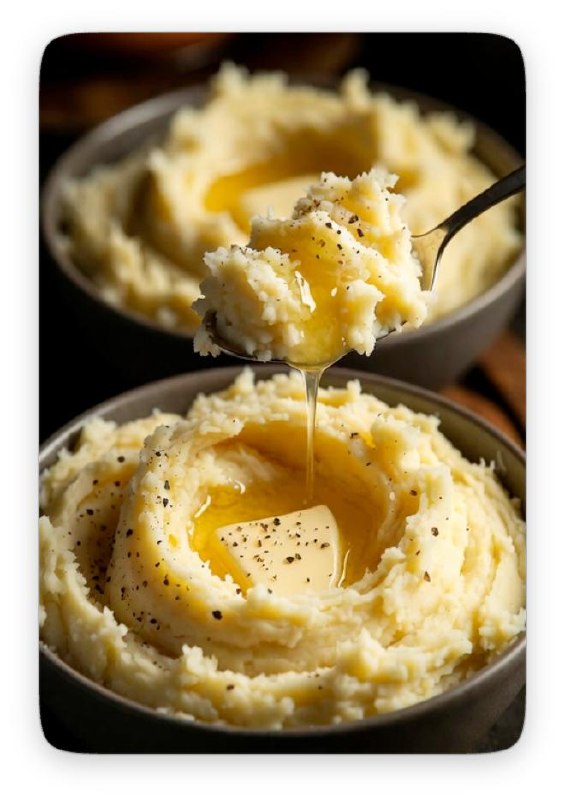
Instructions
- Place the quartered potatoes in a large pot and cover with cold water. Add a generous pinch of salt to the water. The salt helps to season the potatoes from the inside out.
- Bring the water to a boil over high heat, then reduce the heat to medium and simmer until the potatoes are fork-tender. This should take about 15-20 minutes. You should be able to easily pierce the potatoes with a fork with very little resistance.
- Drain the potatoes thoroughly using a colander. Return the drained potatoes to the pot.
- Place the pot back on the stovetop over low heat and let the potatoes steam for a minute or two to dry them out slightly. This will help prevent them from becoming waterlogged and improve the overall texture of the mashed potatoes.
- Remove the pot from the heat and add the butter. Let the butter melt completely, then use a potato masher or a hand mixer to begin mashing the potatoes.
- Gradually add the warmed heavy cream and milk, continuing to mash until the potatoes are smooth and creamy. Be careful not to overmix, as this can make the potatoes gummy.
- Season with salt and pepper to taste. Start with the recommended amounts and then adjust according to your preference.
- Serve immediately and enjoy! These mashed potatoes are best served hot.
Cooking Tips and Variations
Here are some tips to ensure your mashed potatoes turn out perfectly every time:
- Potato Selection: Yukon Gold potatoes are ideal for creamy mashed potatoes due to their naturally buttery flavor and smooth texture. Russet potatoes can also be used, but they tend to be fluffier and may require more liquid to achieve the desired creaminess.
- Warming Dairy: Warming the heavy cream and milk before adding them to the potatoes is crucial. Cold dairy can lower the temperature of the potatoes, resulting in a less creamy and more dense texture.
- Don’t Overmix: Overmixing mashed potatoes can release too much starch, leading to a gummy texture. Mash or mix until just smooth and creamy.
- Seasoning: Taste the potatoes frequently while seasoning and adjust the salt and pepper as needed. Remember that salt enhances the other flavors, so don’t be afraid to add a little more if necessary.
- Mashing Tools: A potato ricer will produce the smoothest mashed potatoes, while a potato masher will give you a slightly chunkier texture. A hand mixer can also be used, but be careful not to overmix.
- Adding Fat: Add the butter and cream gradually, allowing the potatoes to absorb each addition before adding more. This will help create a more emulsified and creamy texture.
- Salt the Water: Adding salt to the water while boiling the potatoes helps to season them from the inside out. This will enhance the overall flavor of the mashed potatoes.
- Peeling or Not Peeling: For the smoothest mashed potatoes, peel the potatoes before boiling. However, leaving the skins on adds texture, fiber, and a more rustic flavor. It’s a matter of personal preference.
Here are some delicious variations to elevate your mashed potatoes:
- Roasted Garlic Mashed Potatoes: Roast a head of garlic and mash the cloves into the potatoes for a rich and savory flavor.
- Herb Mashed Potatoes: Add fresh herbs like chives, parsley, or thyme to the potatoes for a bright and aromatic twist.
- Cheese Mashed Potatoes: Stir in shredded cheddar, Gruyere, or Parmesan cheese for a cheesy and decadent treat.
- Sour Cream and Chive Mashed Potatoes: Substitute some of the heavy cream with sour cream for a tangy and flavorful variation. Add chopped chives for a fresh and herbaceous element.
- Bacon and Cheddar Mashed Potatoes: Crumble cooked bacon and shredded cheddar cheese into the potatoes for a savory and satisfying combination.
Storage and Reheating
Storage:
Leftover mashed potatoes can be stored in an airtight container in the refrigerator for up to 3-4 days. It’s important to cool the mashed potatoes completely before refrigerating them to prevent bacterial growth.
Reheating:
There are several ways to reheat mashed potatoes:
- Microwave: Place the mashed potatoes in a microwave-safe dish and add a splash of milk or cream to help restore moisture. Cover the dish and microwave in 1-minute intervals, stirring in between, until heated through.
- Stovetop: Place the mashed potatoes in a saucepan and add a splash of milk or cream. Heat over low heat, stirring frequently, until heated through. Be careful not to burn the potatoes.
- Oven: Preheat the oven to 350°F (175°C). Place the mashed potatoes in an oven-safe dish and add a splash of milk or cream. Cover the dish with foil and bake for 20-25 minutes, or until heated through.
Important Notes on Reheating:
- Adding a little milk or cream when reheating helps to prevent the mashed potatoes from drying out.
- Avoid overheating the mashed potatoes, as this can make them gummy or dry.
- Stir the mashed potatoes frequently while reheating to ensure even heating.
Frequently Asked Questions
Why are my mashed potatoes gummy?
Gummy mashed potatoes are usually the result of overmixing. Overmixing releases too much starch from the potatoes, which creates a gluey texture. To avoid this, mash or mix the potatoes until just smooth and creamy. Using a potato ricer can also help prevent overmixing.
Can I use a different type of potato?
Yes, you can use other types of potatoes, but the texture of the mashed potatoes will vary. Yukon Gold potatoes are ideal for creamy mashed potatoes, while Russet potatoes will result in a fluffier texture. Red potatoes can also be used, but they have a slightly waxy texture. Adjust the amount of liquid as needed depending on the type of potato you use.
Can I make mashed potatoes ahead of time?
Yes, you can make mashed potatoes ahead of time, but they are best served fresh. To make them ahead, prepare the mashed potatoes as directed, then store them in an airtight container in the refrigerator. When ready to serve, reheat them using one of the methods described above. You may need to add a little extra milk or cream to restore the desired consistency.
What can I serve with mashed potatoes?
Mashed potatoes are a versatile side dish that pairs well with a variety of main courses. They are a classic accompaniment to roasted chicken, turkey, beef, and pork. They also go well with stews, casseroles, and vegetarian dishes. Mashed potatoes are also a staple on holiday tables, such as Thanksgiving and Christmas.