Instructions
- Preheat the oven: Preheat your oven to 375°F (190°C). Lightly grease a baking dish.
- Prepare the salmon: Gently slice a pocket into each salmon fillet horizontally, being careful not to cut all the way through. You want to create a space for the stuffing.
- Make the crab and shrimp stuffing: In a medium bowl, combine the crab meat, chopped shrimp, mayonnaise, breadcrumbs, parsley, chives, lemon juice, Dijon mustard, salt, and pepper. Gently mix until just combined. Be careful not to overmix, as this can make the crab meat tough.
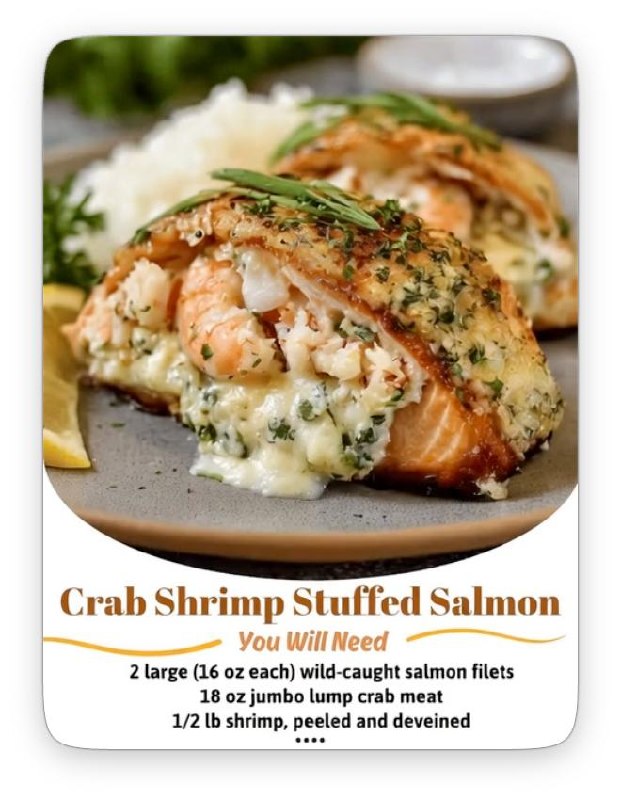
- Stuff the salmon fillets: Carefully spoon the crab and shrimp mixture into the pocket of each salmon fillet, dividing it evenly. Do not overstuff the fillets, as the stuffing may leak out during baking.
- Bake the salmon: Place the stuffed salmon fillets in the prepared baking dish. Drizzle the olive oil over the top of the salmon.
- Cook the salmon: Bake for 20-25 minutes, or until the salmon is cooked through and the internal temperature reaches 145°F (63°C). The salmon should flake easily with a fork. If you want a more golden-brown top, you can broil the salmon for the last 1-2 minutes, watching carefully to prevent burning.
- Rest and serve: Remove the salmon from the oven and let it rest for a few minutes before serving. This allows the juices to redistribute, resulting in a more moist and flavorful salmon. Serve immediately with lemon wedges and your favorite side dishes.
Cooking Tips and Variations
Here are some tips and variations to help you create the perfect Crab Shrimp Stuffed Salmon:
- Preventing stuffing leakage: To prevent the stuffing from leaking out during baking, make sure not to overstuff the salmon fillets. You can also use toothpicks to secure the opening of the pocket, removing them before serving.
- Ensuring even cooking: To ensure the salmon cooks evenly, use fillets that are similar in size and thickness. If the fillets are uneven, the thinner ones may cook faster and become dry.
- Flavor variations: Get creative with the flavors! Try adding a touch of lemon zest to the stuffing for a brighter flavor. You can also add a pinch of red pepper flakes for a little heat. Other herbs like dill or tarragon can also complement the seafood flavors.
- Doneness check: To check if the salmon is done, insert a fork into the thickest part of the fillet and gently twist. If the salmon flakes easily, it’s cooked through. You can also use a meat thermometer to ensure the internal temperature reaches 145°F (63°C). Remember that the salmon will continue to cook slightly after being removed from the oven.
- Crab Meat Substitutions: If jumbo lump crab meat is unavailable, you can substitute with other types of crab meat, such as backfin or claw meat. Just be sure to pick through it carefully to remove any shells.
- Shrimp Size: The size of the shrimp can be adjusted to your preference. Smaller shrimp will disperse more evenly throughout the stuffing, while larger shrimp will provide a more substantial bite.
- Breadcrumb Options: Panko breadcrumbs will provide a crispier texture, while plain breadcrumbs will create a softer stuffing.
- Adding Vegetables: Consider adding finely diced vegetables to the stuffing, such as celery, bell pepper, or onion, for added flavor and texture.
- Wine Pairing: A crisp white wine, such as Sauvignon Blanc or Pinot Grigio, pairs beautifully with this dish. The acidity of the wine complements the richness of the salmon and the sweetness of the crab and shrimp.
- Side Dish Suggestions: Roasted asparagus, steamed green beans, or a simple salad are excellent side dishes to accompany the Crab Shrimp Stuffed Salmon. Rice pilaf or quinoa are also great options for a more substantial meal.
Storage and Reheating
Here’s how to properly store and reheat your Crab Shrimp Stuffed Salmon leftovers:
- Storage: Allow the salmon to cool completely before storing. Place the leftovers in an airtight container and refrigerate for up to 3 days.
- Reheating: Preheat your oven to 350°F (175°C). Place the salmon in an oven-safe dish and cover with foil. Bake for 10-15 minutes, or until heated through. Be careful not to overcook the salmon, as it can become dry. You can also reheat the salmon in the microwave, but this may result in a less even texture. Heat in short intervals, checking frequently to prevent overcooking.
- Freezing: While it’s best to enjoy the salmon fresh, you can freeze it for longer storage. Wrap the cooled salmon tightly in plastic wrap and then in aluminum foil. Freeze for up to 2 months. Thaw the salmon overnight in the refrigerator before reheating. Keep in mind that the texture of the salmon may change slightly after freezing and thawing.
Frequently Asked Questions
Can I use frozen salmon?
Yes, you can use frozen salmon fillets for this recipe. Just make sure to thaw them completely before preparing. Place the frozen salmon in the refrigerator overnight or use the cold water thawing method. Pat the salmon dry with paper towels before stuffing.
Can I prepare the stuffing ahead of time?
Yes, you can prepare the crab and shrimp stuffing up to 24 hours in advance. Store it in an airtight container in the refrigerator. When you’re ready to assemble the salmon, give the stuffing a gentle stir before using.
How do I prevent the salmon from drying out?
To prevent the salmon from drying out during baking, avoid overcooking it. Bake it until it’s just cooked through and flakes easily with a fork. You can also drizzle a little extra olive oil over the salmon before baking to help keep it moist. Covering the baking dish with foil during the first half of the baking time can also help to retain moisture.
Can I grill the stuffed salmon instead of baking it?
Yes, you can grill the stuffed salmon. Preheat your grill to medium heat. Lightly oil the grill grates. Place the stuffed salmon fillets on the grill and cook for 6-8 minutes per side, or until the salmon is cooked through. Be careful when flipping the salmon, as the stuffing may be delicate. Grilling will impart a smoky flavor to the salmon, adding another layer of complexity to the dish.