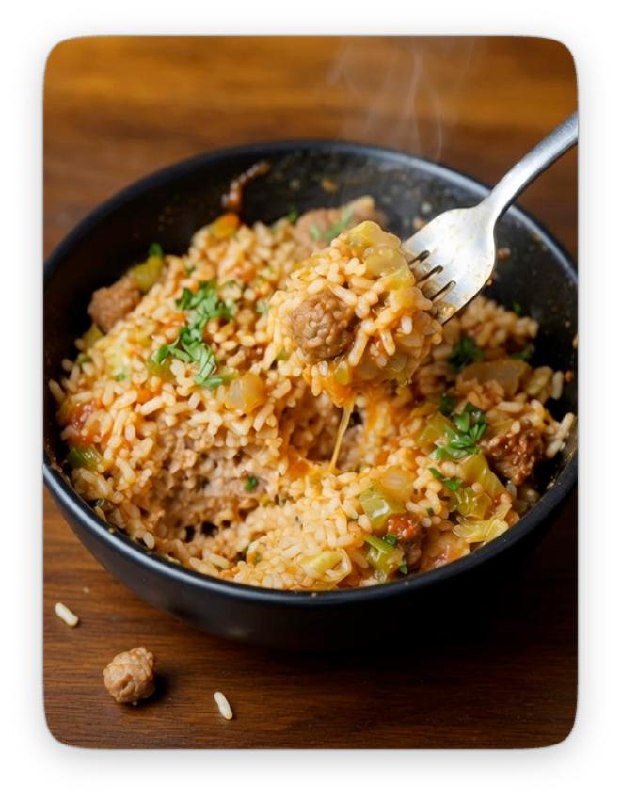
Instructions
- Heat the olive oil in a large Dutch oven or pot over medium heat. Add the sliced andouille sausage and cook until browned, about 5-7 minutes. Remove the sausage from the pot and set aside.
- Add the chopped onion, bell pepper, and celery to the pot and cook until softened, about 5-7 minutes. This is your “holy trinity,” the foundation of many Cajun dishes.
- Add the minced garlic and cook for another minute, until fragrant. Be careful not to burn the garlic.
- Stir in the diced tomatoes and tomato sauce. Bring to a simmer and cook for 5 minutes, allowing the flavors to meld.
- Add the rinsed rice, shredded cabbage, chicken broth, Cajun seasoning, smoked paprika, and cayenne pepper (if using). Stir well to combine.
- Return the browned sausage to the pot.
- Bring the mixture to a boil, then reduce the heat to low, cover, and simmer for 20-25 minutes, or until the rice is cooked and the liquid is absorbed. The cabbage should be tender but not mushy.
- Remove from heat and let stand for 5 minutes before fluffing with a fork. This allows the flavors to further develop and the rice to finish cooking.
- Season with salt and black pepper to taste.
- Garnish with fresh chopped parsley before serving.
Cooking Tips and Variations
Sausage Selection: For the most authentic Cajun flavor, use andouille sausage. If you can’t find andouille, you can substitute with another smoked sausage or kielbasa. Just be sure to choose a sausage with a good amount of spice.
Spice Level: Cajun seasoning can vary in spice level, so start with 2 tablespoons and adjust to your preference. If you like it extra spicy, add a pinch of cayenne pepper or a few dashes of hot sauce.
Rice Texture: Rinsing the rice before cooking helps to remove excess starch, resulting in a fluffier jambalaya. Be sure to use the correct ratio of liquid to rice (2 cups broth to 1 cup rice) for perfectly cooked rice.
Cabbage Texture: To prevent the cabbage from becoming too mushy, add it at the same time as the rice. This allows it to cook through without overcooking. You can also use a combination of green and red cabbage for added color and texture.
One-Pot Cooking: One of the best things about jambalaya is that it’s a one-pot meal, making cleanup a breeze. Just be sure to use a large enough pot to accommodate all the ingredients.
Flavor Development: Allowing the jambalaya to simmer on low heat for the specified time is crucial for developing the rich and complex flavors. Resist the urge to stir it too often, as this can release starch from the rice and make it sticky.
Vegetable Variations: Feel free to add other vegetables to your jambalaya, such as okra, corn, or diced sweet potatoes. These additions will add extra flavor and nutrients.
Protein Variations: You can also add other proteins to your jambalaya, such as chicken, shrimp, or crawfish. If using chicken, brown it along with the sausage. If using shrimp or crawfish, add them during the last 5-10 minutes of cooking, as they cook quickly.
Smoked Flavor: For a deeper smoky flavor, add a few drops of liquid smoke to the jambalaya. Be careful not to add too much, as it can be overpowering.
Herb Variations: Experiment with different herbs to enhance the flavor of your jambalaya. Thyme, oregano, and bay leaf are all great additions.
Storage and Reheating
Storage: Leftover Cajun Cabbage Jambalaya can be stored in an airtight container in the refrigerator for up to 3-4 days. Be sure to cool it completely before refrigerating.
Reheating: To reheat, you can use the microwave or the stovetop. For the microwave, place a serving of jambalaya in a microwave-safe dish and heat for 1-2 minutes, or until heated through. For the stovetop, place the jambalaya in a pot or skillet with a splash of water or broth and heat over medium heat, stirring occasionally, until heated through.
Freezing: Jambalaya can also be frozen for longer storage. Allow it to cool completely, then transfer it to a freezer-safe container or bag. Freeze for up to 2-3 months. Thaw in the refrigerator overnight before reheating.
Reheating from Frozen: To reheat from frozen, you can either thaw it overnight in the refrigerator or reheat it directly from frozen. If reheating from frozen, add a splash of water or broth to the pot or skillet and cook over medium heat, stirring occasionally, until heated through. Be sure to cook it thoroughly to ensure that it is safe to eat.
Frequently Asked Questions
Can I use brown rice instead of white rice?
Yes, you can use brown rice, but you’ll need to adjust the cooking time and liquid accordingly. Brown rice typically takes longer to cook than white rice, so you’ll need to simmer the jambalaya for about 45-50 minutes, or until the rice is tender and the liquid is absorbed. You may also need to add a bit more broth if the rice starts to dry out.
Can I make this recipe vegetarian?
Absolutely! To make this recipe vegetarian, simply omit the sausage and use vegetable broth instead of chicken broth. You can also add other vegetables, such as mushrooms, zucchini, or eggplant, to add more flavor and texture.
Can I use pre-shredded cabbage?
Yes, you can use pre-shredded cabbage to save time. Just be sure to check the expiration date and use it within a few days of opening the package. You can find pre-shredded cabbage in the produce section of most grocery stores.
What if I don’t have Cajun seasoning?
If you don’t have Cajun seasoning on hand, you can make your own blend using a combination of paprika, cayenne pepper, garlic powder, onion powder, dried oregano, dried thyme, salt, and black pepper. There are many recipes online for homemade Cajun seasoning, so you can easily find one that suits your taste.