Instructions
- Prepare the Noodles: Bring a large pot of water to a boil. Add the noodles and cook according to package directions until al dente. Drain the noodles well, reserving about 2 tablespoons of the cooking water. Rinse the noodles briefly with cold water to stop the cooking process and prevent them from sticking together.
- Make the Pork Sauce: Heat the vegetable oil in a wok or large skillet over medium-high heat. Add the ground pork and cook, breaking it up with a spoon, until browned and cooked through. Drain any excess grease.
- Add the minced garlic and ginger to the pork and cook for another minute, until fragrant.
- Stir in the soy sauce, Chinese cooking wine (or dry sherry), dark soy sauce (if using), sugar, and white pepper. Cook for another 2-3 minutes, allowing the sauce to thicken slightly and the flavors to meld. Remove from heat and set aside.
- Prepare the Sauce: In a medium bowl, whisk together the Chinese sesame paste (or tahini), chili oil, soy sauce, black vinegar (or rice vinegar), sugar, and Sichuan peppercorn powder (if using).
- Add the reserved noodle cooking water to the sauce and whisk until smooth and creamy. If the sauce is too thick, add a little more water until it reaches your desired consistency.
- Assemble the Noodles: Divide the drained noodles among bowls. Pour the sauce over the noodles.
- Top with the pork sauce.
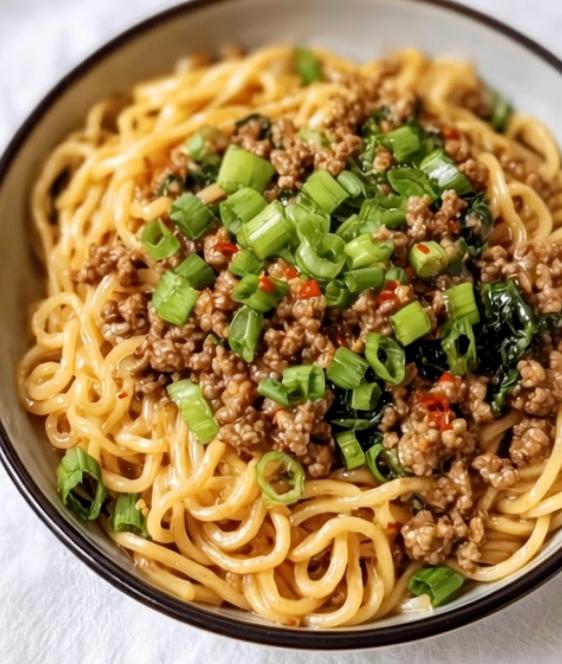
- Garnish with sliced green onions and chopped roasted peanuts (if using). Add blanched bok choy or spinach if desired.
- Serve immediately and enjoy!
Cooking Tips and Variations
- Noodle Choice: The best noodles for Dan Dan Noodles are thin, round wheat noodles, similar to ramen noodles. Fresh or dried noodles can be used. If using dried noodles, be sure to cook them al dente to prevent them from becoming mushy.
- Sesame Paste Substitution: Chinese sesame paste has a richer, nuttier flavor than tahini. However, tahini can be used as a substitute in a pinch. If using tahini, consider adding a teaspoon of toasted sesame oil to enhance the sesame flavor.
- Chili Oil Quality: The quality of your chili oil will significantly impact the flavor of the dish. Look for chili oil that is infused with chili flakes and spices for the best flavor. You can also make your own chili oil by infusing oil with dried chilies, Sichuan peppercorns, and other aromatics.
- DIY Chili Oil: To make your own chili oil, heat 1 cup of vegetable oil in a saucepan over medium heat. Add 1/4 cup dried chili flakes, 1 tablespoon Sichuan peppercorns, 2 star anise, and 1 cinnamon stick. Cook for 10-15 minutes, until the chili flakes are dark red and fragrant. Remove from heat and let cool completely. Strain the oil through a fine-mesh sieve, discarding the solids. Store the chili oil in an airtight container at room temperature.
- Spice Level Adjustment: Adjust the amount of chili oil to your desired spice level. Start with a smaller amount and add more to taste. If you want even more heat, add a pinch of red pepper flakes to the sauce.
- Sichuan Peppercorns: Sichuan peppercorns have a unique numbing sensation that is characteristic of Sichuan cuisine. If you can’t find Sichuan peppercorn powder, you can toast whole Sichuan peppercorns in a dry skillet until fragrant, then grind them into a powder using a spice grinder. If you don’t like the numbing sensation, you can omit them altogether.
- Protein Variations: While ground pork is the traditional protein, you can also use ground chicken, turkey, or beef. For a vegetarian option, use crumbled tofu or tempeh.
- Vegetable Additions: Feel free to add other vegetables to the dish, such as blanched bok choy, spinach, or bean sprouts.
- Make-Ahead Tip: The pork sauce and the sauce can be made ahead of time and stored in the refrigerator for up to 3 days. When ready to serve, simply cook the noodles and assemble the dish.
Storage and Reheating
- Storage: Leftover Dan Dan Noodles can be stored in an airtight container in the refrigerator for up to 3 days. It’s best to store the noodles, sauce, and pork separately to prevent the noodles from becoming soggy.
- Reheating: To reheat, warm the pork sauce in a skillet over medium heat. Reheat the sauce in a separate saucepan over low heat, adding a little water if needed to thin it out. Reheat the noodles in boiling water for a few seconds, or microwave them briefly until heated through. Assemble the noodles as described above.
Frequently Asked Questions
Can I make this recipe vegetarian?
Yes! To make this recipe vegetarian, substitute the ground pork with crumbled firm or extra-firm tofu or tempeh. Press the tofu to remove excess water before crumbling it. You may also need to adjust the seasoning slightly, adding a touch more soy sauce or umami-rich ingredients to compensate for the lack of meat flavor. Ensure your cooking wine is vegetarian-friendly.
Is it possible to make this gluten-free?
While traditional Dan Dan Noodles are made with wheat noodles, you can easily make this dish gluten-free by using gluten-free noodles, such as rice noodles or glass noodles. Be sure to check the labels of your soy sauce and chili oil to ensure they are gluten-free, as some brands may contain wheat. Tamari is a good gluten-free alternative to soy sauce.
I can’t find Chinese sesame paste. What can I use instead?
As mentioned earlier, tahini is a good substitute for Chinese sesame paste. However, tahini has a milder flavor, so you may want to add a teaspoon of toasted sesame oil to enhance the sesame flavor. You can also try using a combination of tahini and a small amount of peanut butter for a richer, nuttier flavor.
How can I make this dish less spicy?
If you’re sensitive to spice, start with a smaller amount of chili oil and add more to taste. You can also remove the seeds from the chili flakes before adding them to the chili oil (if making your own). If the dish is already too spicy, you can add a dollop of plain yogurt or sour cream to help cool it down.