Introduction
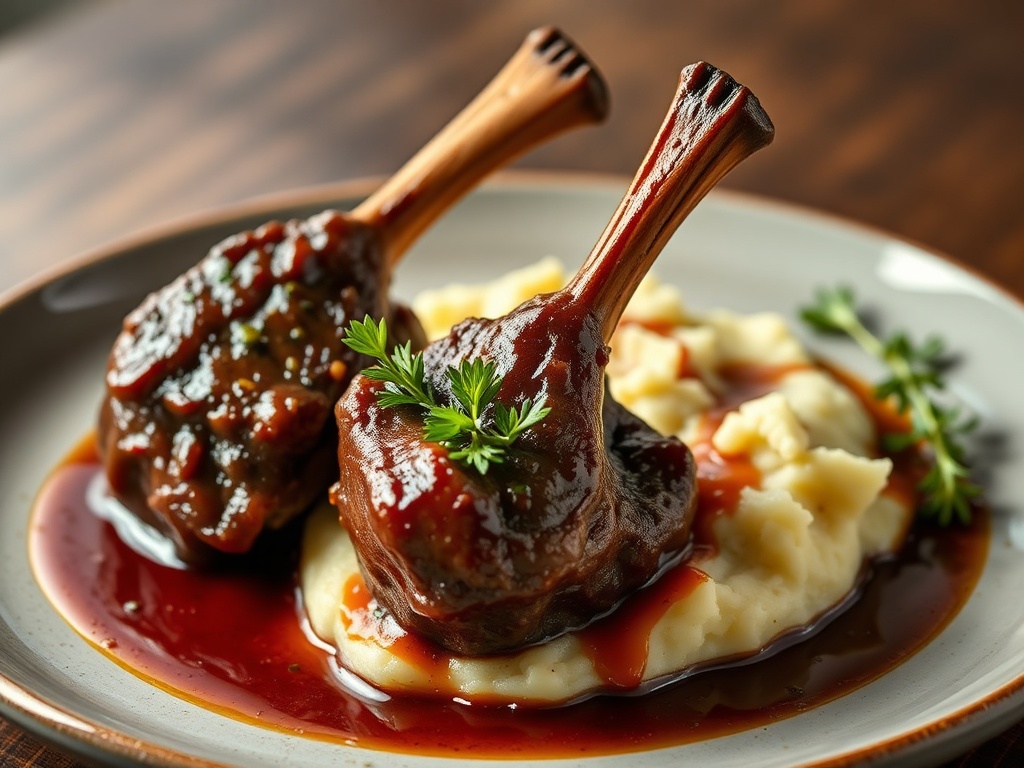
Imagine this: a chilly evening, the rich aroma of red wine and savory herbs wafting through your home, and a plate piled high with impossibly tender lamb shanks, practically melting off the bone. Nestled beside this culinary masterpiece is a cloud of creamy, garlicky mashed potatoes, ready to soak up every last drop of the luxurious, velvety sauce. This isn’t just a meal; it’s an experience, a deeply comforting embrace for the senses, and a testament to the magic of slow cooking. Our Velvet-Braised Lamb Shanks in Red Wine over Creamy Garlic Mashed Potatoes recipe is designed to bring that restaurant-quality indulgence right into your kitchen, making you feel like a gourmet chef without the fuss.
What makes this dish so special? It’s the harmonious interplay of textures and flavors. We start with robust lamb shanks, transformed by hours of gentle braising into a fork-tender delight. The braising liquid, a symphony of dry red wine, aromatic vegetables, and savory broth, reduces into a glossy, deeply flavored sauce that clings to the lamb like a velvet cloak. This rich foundation is perfectly balanced by the bright, pungent kick of garlic infused into silky smooth mashed potatoes, creating a comforting counterpoint that elevates every bite. While it sounds impressive, the beauty of this recipe lies in its straightforward approach: primarily hands-off cooking that yields profoundly rewarding results.
This dish is an ideal choice for a special occasion dinner, a festive holiday gathering, or simply a weekend when you crave something truly extraordinary and comforting. It’s the kind of meal that gathers loved ones around the table, sparking conversation and creating lasting memories. We promise that by following our detailed guide, you will achieve spectacular results, impressing both yourself and your guests with a dish that is as visually stunning as it is delicious. Prepare to savor the ultimate comfort food experience.
Nutritional Information
Per serving (approximate values):
- Calories: 850 kcal
- Protein: 70g
- Carbohydrates: 60g
- Fat: 35g
- Fiber: 8g
- Sodium: 950mg
Ingredients
- 4 lamb shanks (about 1-1.5 lbs each), trimmed of excess fat
- 2 tablespoons olive oil, divided
- 1 large yellow onion, chopped
- 2 carrots, peeled and chopped
- 2 celery stalks, chopped
- 4 cloves garlic, minced (for braise)
- 2 tablespoons tomato paste
- 1 teaspoon dried thyme
- 1 bay leaf
- 1 ½ cups dry red wine (e.g., Cabernet Sauvignon, Merlot, Pinot Noir)
- 3 cups beef broth, low sodium
- 1 tablespoon all-purpose flour (optional, for thickening)
- Salt and freshly ground black pepper to taste
- Fresh parsley, chopped, for garnish
For the Creamy Garlic Mashed Potatoes:
- 3 lbs Russet or Yukon Gold potatoes, peeled and cut into 1-inch pieces
- 6 cloves garlic, peeled and smashed (for potatoes)
- ½ cup heavy cream (or whole milk)
- ½ cup unsalted butter, cut into cubes
- Salt and freshly ground black pepper to taste
Instructions
- Prepare the Lamb Shanks: Pat the lamb shanks thoroughly dry with paper towels. Season generously all over with salt and freshly ground black pepper. This thorough drying is crucial for achieving a good sear, as moisture on the surface prevents the Maillard reaction from occurring effectively.
- Sear the Lamb: Heat 1 tablespoon of olive oil in a large Dutch oven or oven-safe pot over medium-high heat. Once shimmering, add the lamb shanks (in batches if necessary to avoid overcrowding, which would steam the meat instead of searing it). Sear on all sides until deeply browned and a beautiful crust forms, about 3-5 minutes per side. This browning creates a rich, complex flavor profile that is essential to the dish. Remove the seared shanks from the pot and set aside.
- Sauté the Aromatics: Reduce the heat to medium. Add the remaining 1 tablespoon of olive oil to the pot. Add the chopped onion, carrots, and celery. Sauté for 5-7 minutes, stirring occasionally, until softened. Add the minced garlic (for the braise) and cook for another minute until fragrant.
- Build the Flavor Base: Stir in the tomato paste and cook for 2-3 minutes, stirring constantly, allowing it to deepen in color and flavor. Sprinkle in the dried thyme and add the bay leaf.
- Deglaze the Pot: Pour in the red wine. Bring to a simmer, scraping up all the browned bits (the “fond”) from the bottom of the pot with a wooden spoon. These bits are packed with concentrated flavor and are vital for the sauce. Let the wine simmer and reduce by about half, about 5-7 minutes. The acidity from the wine also helps to tenderize the meat during braising.
- Add Broth and Braise: Return the seared lamb shanks to the pot. Pour in the beef broth until the shanks are mostly submerged. Bring the liquid to a gentle simmer.
- Braise in the Oven: Cover the Dutch oven tightly with a lid and transfer it to a preheated oven at 325°F (160°C). Braise for 3 to 4 hours, or until the lamb is fall-off-the-bone tender. The low and slow cooking process breaks down the tough collagen in the lamb shanks into gelatin, resulting in that desired velvet texture and enriching the sauce.
- Rest the Lamb and Refine the Sauce: Carefully remove the lamb shanks from the pot and place them on a plate. Tent loosely with foil and let them rest for at least 15-20 minutes. Resting allows the juices to redistribute, leading to more tender and flavorful meat. While the lamb rests, skim off any excess fat from the surface of the braising liquid. If desired, you can strain the sauce through a fine-mesh sieve for a smoother consistency, pressing on the solids to extract all the liquid, then return the sauce to the pot. If a thicker sauce is desired, you can whisk 1 tablespoon of flour with 2 tablespoons of cold water to create a slurry, then whisk it into the simmering sauce and cook for a few minutes until thickened. Taste and adjust seasoning with salt and pepper.
- Prepare the Potatoes: While the lamb is braising, prepare the mashed potatoes. Place the peeled and cut potatoes in a large pot and cover with cold water by about an inch. Add a generous pinch of salt to the water; this seasons the potatoes from the inside out. Add the smashed garlic cloves to the pot with the potatoes. Bring to a boil, then reduce heat and simmer until the potatoes are fork-tender, about 15-20 minutes. Cutting potatoes into similar-sized pieces ensures even cooking.
- Drain and Mash: Drain the potatoes and garlic very thoroughly in a colander, shaking gently to remove as much excess water as possible. Return the hot, drained potatoes and garlic to the empty pot.
- Incorporate Dairy: In a small saucepan, gently warm the heavy cream and butter over low heat until the butter is melted and the mixture is warm (do not boil). Adding warm dairy to hot potatoes helps them absorb the liquids more effectively, resulting in a smoother, fluffier texture without overworking them.
- Mash the Potatoes: Pour the warm cream and butter mixture over the potatoes and garlic. Mash with a potato masher or use a potato ricer for an ultra-smooth consistency until creamy and lump-free. Season generously with salt and freshly ground black pepper to taste.
- Serve: Ladle a generous portion of creamy garlic mashed potatoes onto each plate. Top with a velvet-braised lamb shank. Spoon the rich red wine sauce generously over the lamb and potatoes. Garnish with fresh chopped parsley.
Cooking Tips and Variations
For the best results, always pat the lamb shanks very dry before searing; this is the secret to a deep, flavorful crust thanks to the Maillard reaction. When deglazing, ensure you scrape up all the browned bits (the “fond”) from the bottom of the pan as they are packed with concentrated flavor that will enrich your sauce. Don’t rush the braising process; the low and slow heat is essential for breaking down the collagen in the lamb into gelatin, which is what gives the meat its “velvet” texture and thickens the sauce naturally. For the mashed potatoes, using warm dairy prevents the potato starches from seizing up, leading to a smoother and fluffier result. Salting the potato cooking water seasons them from the inside out, providing a more balanced flavor.
To enhance the umami in your braise, consider adding a teaspoon of anchovy paste (it won’t make the sauce taste fishy, but will deepen its savory notes) or a parmesan rind to the braising liquid. For an even more complex flavor, you can roast the garlic cloves whole with a drizzle of olive oil before adding them to the potatoes for a sweeter, milder garlic essence. Experiment with different root vegetables in the braise, such as parsnips or celery root, for added depth and nutrition. If you prefer a lighter sauce, you can strain out the vegetables after braising, or for a heartier sauce, you can mash some of the softened vegetables back into the liquid. For the mashed potatoes, you can add a touch of cream cheese or sour cream for an extra tang and richness. A splash of balsamic vinegar added to the sauce at the end can brighten the flavors beautifully.
Storage and Reheating
This dish is fantastic for leftovers, often tasting even better the next day as the flavors have more time to meld. Allow the lamb shanks and mashed potatoes to cool completely before storing. Transfer the lamb shanks and their sauce to an airtight container. Store the mashed potatoes in a separate airtight container. Both can be refrigerated for up to 3-4 days.
For reheating, the lamb shanks are best reheated gently on the stovetop or in the oven. Place the lamb shanks and sauce in an oven-safe dish, cover tightly with foil, and reheat in a preheated oven at 300°F (150°C) for 20-30 minutes, or until warmed through. Alternatively, you can reheat them on the stovetop over low heat, stirring occasionally, adding a splash of broth or water if the sauce becomes too thick. Reheat mashed potatoes gently on the stovetop over low heat, stirring frequently, adding a splash of milk or cream to restore their creamy texture. You can also microwave individual portions, stirring halfway through.
This recipe is also excellent for freezing. Once cooled, separate the lamb shanks and sauce into individual freezer-safe containers or heavy-duty freezer bags. The mashed potatoes can also be frozen separately. They can be frozen for up to 3 months. Thaw overnight in the refrigerator before reheating as directed above.
Frequently Asked Questions
What kind of red wine is best for braising lamb?
For braising lamb, a dry, full-bodied red wine is ideal. Excellent choices include Cabernet Sauvignon, Merlot, Pinot Noir, or even a Zinfandel. Avoid anything too sweet or overly tannic. The goal is to add depth and complexity to the sauce, and a good quality drinking wine that you enjoy will translate into a delicious braising liquid. The acidity in the wine also helps tenderize the meat.
My lamb shanks aren’t as tender as I’d like. What went wrong?
The most common reason for tough braised lamb is not cooking it long enough. Braising is a low-and-slow process designed to break down tough connective tissues. If your lamb shanks are still tough, simply return them to the oven (or stovetop) and continue braising, checking every 30 minutes, until they are truly fall-off-the-bone tender. Ensure your pot is tightly covered to prevent moisture loss, and check that the liquid is gently simmering, not boiling vigorously.
How can I make my mashed potatoes extra smooth and lump-free?
To achieve the smoothest, lump-free mashed potatoes, start by choosing starchy potatoes like Russet or Yukon Gold. Peel and cut them into even-sized pieces to ensure uniform cooking. After cooking, drain them very thoroughly. For mashing, a potato ricer or food mill is highly recommended as it breaks down the potatoes without overworking them, which can lead to a gummy texture. If using a traditional masher, ensure you mash until completely smooth before incorporating the warm dairy and butter.
Can I make this dish ahead of time for a dinner party?
Absolutely! This dish is a fantastic make-ahead option, as the flavors often improve overnight. You can braise the lamb shanks and make the sauce completely up to two days in advance. Cool them, then refrigerate. On the day of serving, gently reheat the lamb and sauce. Prepare the mashed potatoes fresh just before serving for the best texture, as they tend to dry out slightly when reheated from cold.