Introduction
There are few dishes that evoke the same profound sense of comfort and culinary satisfaction as a perfectly braised lamb shank stew. Imagine a cold, crisp evening, and the aroma of rich, savory lamb slowly cooking, filling your home with an irresistible promise of warmth. This isn’t just a meal; it’s an experience – a testament to the magic that happens when humble ingredients are given time, patience, and a little love. Our Lamb Shank Stew recipe is designed to deliver just that: fall-off-the-bone tender lamb, swimming in a deeply flavorful, aromatic sauce that clings to every morsel.
What makes this recipe truly special is its ability to transform tougher cuts of meat into something incredibly succulent and luxurious. The slow braising process breaks down connective tissues, leaving you with meat so tender it practically melts in your mouth. Coupled with vibrant root vegetables and a robust, herb-infused gravy, this stew is a hearty, wholesome centerpiece for any gathering, or a deeply satisfying meal to enjoy during a quiet night in. Get ready to master the art of braising and create a dish that will undoubtedly become a cherished favorite in your kitchen.
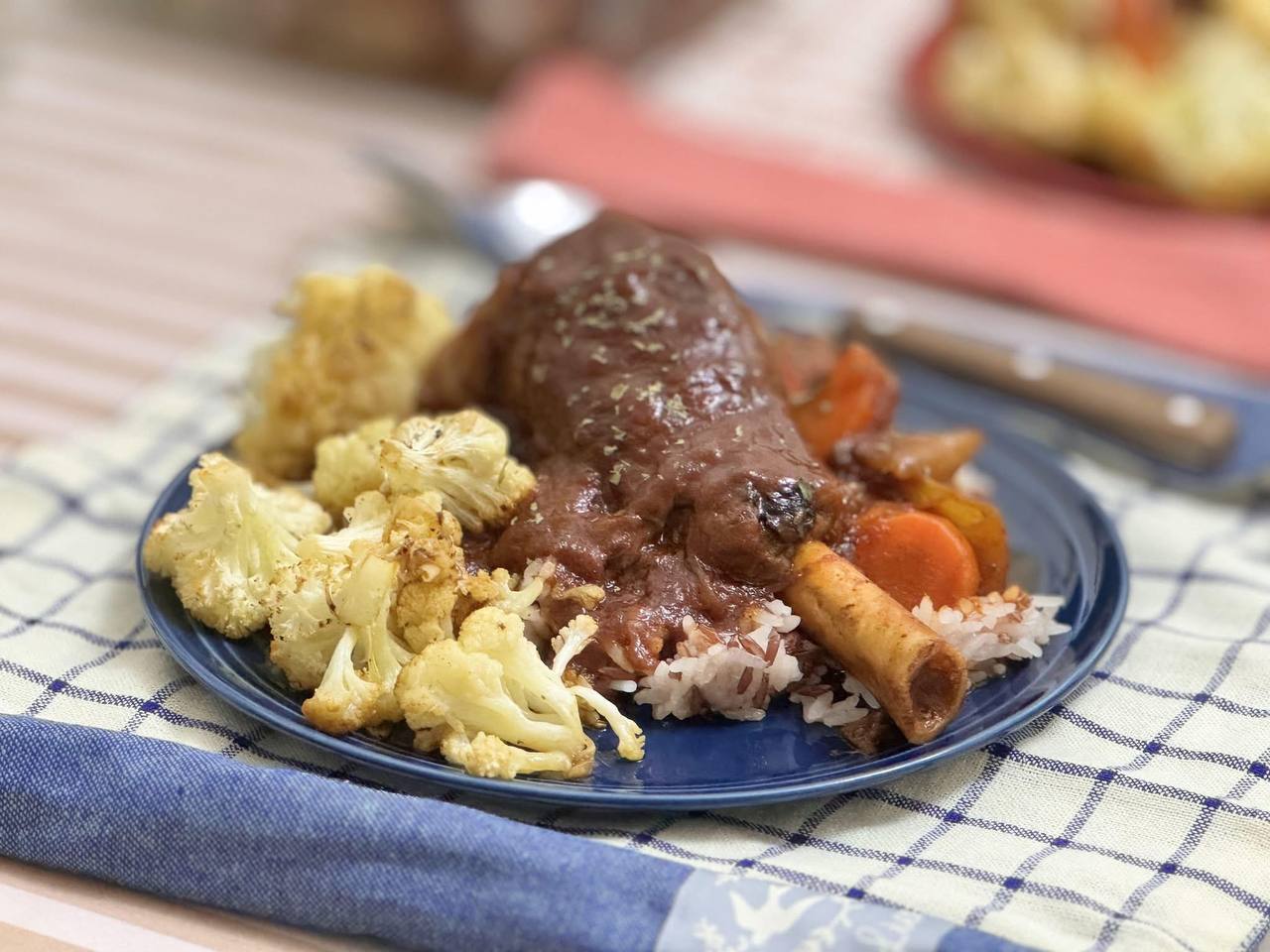
In this comprehensive guide, we’ll walk you through every step to achieve braising perfection. From selecting the finest lamb shanks and aromatics to mastering the slow-cooking process, we’ll ensure your stew is brimming with flavor and tenderness. We’ll also explore ideal serving suggestions, including a beautiful pairing with fluffy rice and golden roasted cauliflower, just like the one pictured. Prepare to unlock the secrets to a truly unforgettable Lamb Shank Stew that will warm you from the inside out.
Nutritional Information
Per serving (approximate values):
- Calories: 750
- Protein: 65g
- Carbohydrates: 40g
- Fat: 35g
- Fiber: 8g
- Sodium: 850mg
Ingredients
- 4-6 lamb shanks (approximately 1.5-2 lbs each)
- 2 tablespoons olive oil, plus more for roasting cauliflower
- 1 large yellow onion, chopped
- 3 medium carrots, peeled and roughly chopped into 1-inch pieces
- 2 celery stalks, roughly chopped into 1-inch pieces
- 4 cloves garlic, minced
- 2 tablespoons tomato paste
- 1 cup dry red wine (such as Cabernet Sauvignon or Merlot)
- 4 cups beef broth or lamb broth
- 1 (14.5 ounce) can diced tomatoes, undrained
- 2 bay leaves
- 1 tablespoon fresh rosemary, chopped, or 1 teaspoon dried rosemary
- 1 tablespoon fresh thyme, chopped, or 1 teaspoon dried thyme
- 1 teaspoon dried oregano
- Salt and freshly ground black pepper to taste
- 1 large head cauliflower, cut into florets
- 1 cup long-grain white rice
- 1 cup water or broth (for rice)
- Fresh parsley, chopped, for garnish
Instructions
- Prepare the Lamb Shanks: Pat the lamb shanks dry thoroughly with paper towels. Season generously all over with salt and freshly ground black pepper.
- Sear the Lamb: Heat 2 tablespoons of olive oil in a large Dutch oven or oven-safe pot over medium-high heat. Working in batches if necessary to avoid overcrowding, sear the lamb shanks on all sides until deeply browned, about 3-5 minutes per side. Remove the seared lamb shanks from the pot and set aside on a plate.
- Sauté the Aromatics: Reduce the heat to medium. Add the chopped onion, carrots, and celery to the same pot. Cook, stirring occasionally, until the vegetables begin to soften, about 5-7 minutes. Add the minced garlic and cook for another minute until fragrant.
- Build the Flavor Base: Stir in the tomato paste and cook for 2 minutes, stirring constantly, allowing it to deepen in color and caramelize slightly. This step is crucial for rich flavor.
- Deglaze with Wine: Pour in the red wine, scraping the bottom of the pot with a wooden spoon to loosen any browned bits (fond). Bring to a simmer and cook for 3-5 minutes, allowing the alcohol to cook off and the liquid to reduce slightly.
- Add Liquids and Seasoning: Return the seared lamb shanks to the pot. Pour in the beef or lamb broth and the diced tomatoes. Add the bay leaves, rosemary, thyme, and oregano. Bring the liquid to a gentle simmer.
- Braise in the Oven: Preheat your oven to 325°F (160°C). Once the stew is simmering, cover the Dutch oven tightly with its lid and transfer it to the preheated oven. Braise for 2.5 to 3.5 hours, or until the lamb is fork-tender and easily pulls away from the bone. The exact cooking time will depend on the size of your shanks.
- Prepare Roasted Cauliflower: While the stew is braising, prepare the cauliflower. Toss the cauliflower florets with a drizzle of olive oil, salt, and pepper on a baking sheet. Roast in the oven during the last 30-40 minutes of the lamb’s cooking time, or until tender and golden brown with slightly crispy edges.
- Cook the Rice: About 20 minutes before the lamb is done, prepare the rice. In a small saucepan, combine 1 cup of long-grain white rice with 1 cup of water or broth. Bring to a boil, then reduce heat to low, cover, and simmer for 15-18 minutes, or until all the liquid is absorbed and the rice is tender. Let stand for 5 minutes, then fluff with a fork.
- Finish the Stew: Once the lamb is tender, carefully remove the Dutch oven from the oven. Remove the bay leaves. Taste the sauce and adjust seasoning with salt and pepper as needed. If the sauce is too thin, you can remove the lamb shanks to a platter, cover to keep warm, and then simmer the sauce on the stovetop over medium-high heat until it reduces and thickens to your desired consistency.
- Serve: Ladle a generous portion of rice onto each plate. Place a tender lamb shank over the rice, spooning plenty of the rich, flavorful stew sauce and vegetables over the top. Serve with a side of roasted cauliflower. Garnish with fresh chopped parsley before serving.
Cooking Tips and Variations
Achieving truly fall-off-the-bone lamb shanks requires patience and a gentle, consistent heat. The initial searing of the lamb shanks is non-negotiable; this step develops a deep, caramelized crust that forms the foundation of the stew’s rich flavor profile. Don’t rush it! Ensure the pot is hot and the shanks are patted dry to get that perfect brown. When sautéing the aromatics, allow them to soften thoroughly and the tomato paste to cook for a couple of minutes; this deepens their sweetness and acidity, contributing to a more complex sauce. Deglazing with red wine not only adds a lovely depth but also helps scrape up all those flavorful browned bits from the bottom of the pot, incorporating them back into the sauce.
For the braising process, a heavy-bottomed Dutch oven is ideal as it distributes heat evenly and retains moisture beautifully. Ensure your lid is tight-fitting to prevent steam from escaping, which is key for tenderizing the meat. While the recipe specifies oven braising, which provides the most consistent heat, you can also adapt this to a stovetop method by simmering very gently on the lowest heat setting for the same duration, ensuring the liquid never boils vigorously. A slow cooker is another excellent option; after searing the lamb and sautéing the aromatics on the stovetop, transfer everything to a slow cooker and cook on low for 6-8 hours or on high for 3-4 hours, until tender.
Don’t be afraid to taste and adjust the seasoning of your stew towards the end of the cooking process. The flavors will have melded and intensified, and a final tweak of salt and pepper can make all the difference. If you prefer a thicker sauce, you have a few options: you can simply simmer the sauce on the stovetop after removing the lamb until it reduces to your desired consistency, or you can create a slurry of 1-2 tablespoons of cornstarch mixed with an equal amount of cold water, stir it into the simmering sauce, and cook until thickened. Remember that the marrow within the shank bone is a delicacy; encourage your diners to enjoy it!
For variations, consider experimenting with different vegetables. Sweet potatoes or parsnips can be added along with the carrots, or try adding mushrooms during the last hour of braising. Swap out the red wine for a dark beer for a different flavor profile. For an even richer sauce with a hint of sweetness, add a tablespoon of balsamic vinegar or a pinch of sugar along with the tomatoes. Fresh herbs like bay leaves, rosemary, and thyme are classic, but a touch of dried orange peel or a pinch of smoked paprika can add intriguing nuances. Serving accompaniments can also be varied: creamy mashed potatoes, polenta, couscous, or even crusty bread for soaking up every last drop of that incredible sauce would be fantastic.
Storage and Reheating
Lamb shank stew is one of those magical dishes that often tastes even better the next day, as the flavors have more time to meld and deepen. To store leftover stew, allow it to cool completely to room temperature (this usually takes 1-2 hours) before transferring it to an airtight container. Make sure to include plenty of the braising liquid, as this will help keep the lamb moist. The stew can be stored in the refrigerator for up to 3-4 days. For longer storage, this stew freezes beautifully. Transfer the cooled stew to freezer-safe containers or heavy-duty freezer bags, leaving a little headspace if using containers. It can be frozen for up to 3 months.
When you’re ready to reheat, if frozen, it’s best to thaw the stew overnight in the refrigerator first. For reheating, you have a few options. The most recommended method is to gently reheat it on the stovetop over medium-low heat. Transfer the stew to a saucepan or Dutch oven and stir occasionally until it’s heated through, adding a splash of broth or water if the sauce appears too thick. This method helps maintain the tenderness of the lamb and prevents it from drying out. You can also reheat individual portions in the microwave; place the stew in a microwave-safe dish, cover, and heat in 1-2 minute intervals, stirring in between, until hot. Be careful not to overheat, as this can make the lamb tough. If reheating a large batch, you can also place it in an oven-safe dish, covered, at 325°F (160°C) for 20-30 minutes, or until thoroughly heated.
Frequently Asked Questions
What kind of lamb shanks should I buy?
Look for fore shanks, which typically have a better meat-to-bone ratio than hind shanks and tend to be more tender. Aim for shanks that are similarly sized, around 1.5 to 2 pounds each, to ensure even cooking. Fresh shanks from a reputable butcher are always best, but frozen shanks will work as well, just ensure they are fully thawed before cooking.
Can I make this stew ahead of time?
Absolutely! This lamb shank stew is an excellent make-ahead meal. As mentioned, the flavors often deepen and improve overnight. You can prepare the entire stew a day or two in advance. Once cooked, let it cool completely, then store it in the refrigerator. Reheat gently on the stovetop or in the oven when you’re ready to serve.
My lamb isn’t falling off the bone. What went wrong?
If your lamb isn’t as tender as you’d like, it simply needs more time. Toughness in braised dishes is almost always a sign of undercooking. Return the stew to the oven (or stovetop/slow cooker) and continue braising, checking periodically, until the meat is fork-tender. Ensure the liquid is simmering gently and the pot is covered tightly to prevent moisture loss. Don’t be afraid to extend the cooking time by another hour or two if necessary.
Can I use different vegetables in the stew?
Yes, absolutely! The beauty of a stew is its versatility. Feel free to incorporate other root vegetables like parsnips, turnips, or sweet potatoes. Mushrooms (cremini or button) can be added during the last hour of braising for an earthy note. Green beans or peas can be stirred in during the last 10-15 minutes of cooking for a pop of freshness and color. Adjust quantities to your preference, ensuring there’s enough braising liquid to cover them.