Introduction
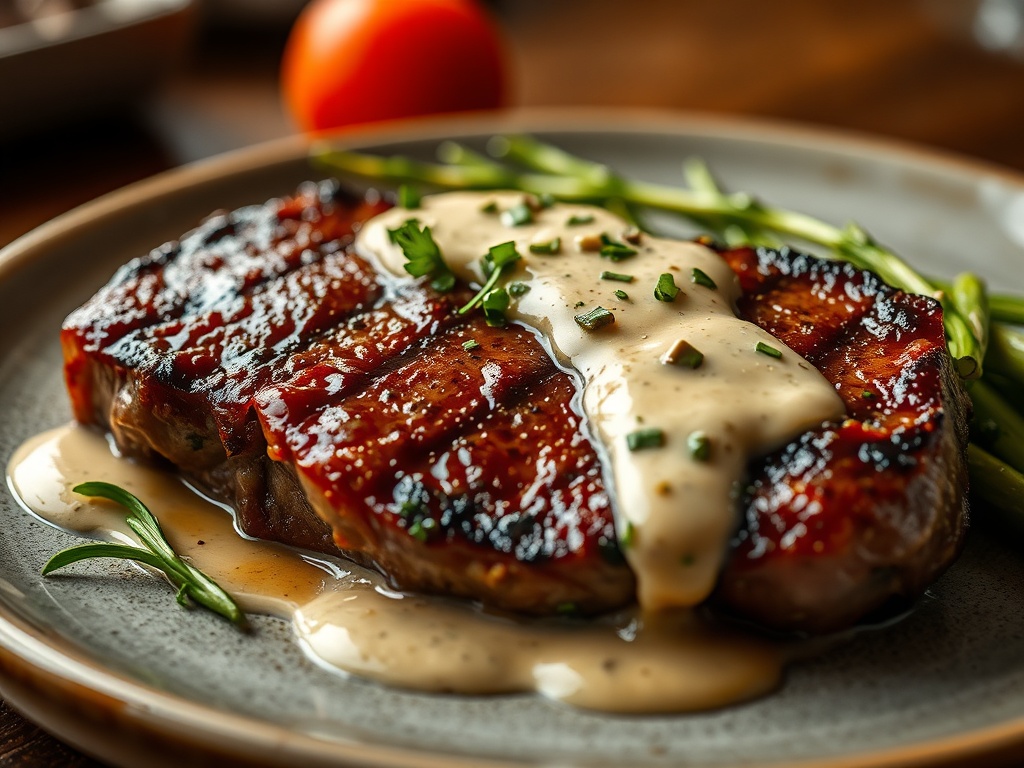
Prepare to elevate your home dining experience to a new level of culinary bliss with our recipe for Juicy Steak with Creamy Garlic Sauce. Imagine a perfectly seared steak, boasting a deep, caramelized crust and a tender, rosy interior, bathed in a rich, velvety garlic cream sauce that clings to every succulent bite. This isn’t just a meal; it’s a symphony of textures and flavors designed to impress, yet surprisingly simple to master in your own kitchen. Forget those expensive restaurant bills; this dish brings gourmet elegance straight to your table, making any evening feel like a special occasion.
What makes this particular recipe stand out? It’s the meticulous attention to detail in achieving that flawless sear, the art of resting the steak to lock in all its natural juices, and the creation of a garlic sauce that is both intensely flavorful and wonderfully smooth. We’ll guide you through each step, ensuring you develop a beautiful crust on your steak while maintaining its juicy tenderness. The sauce, built right in the same pan, captures all those delicious browned bits, transforming them into a luxurious, aromatic coating that complements the steak perfectly. It’s a harmonious pairing that truly sings.
This recipe is ideal for anyone looking to create a memorable meal without spending hours in the kitchen. Whether it’s a romantic date night, a celebratory dinner, or simply a desire to treat yourself to something extraordinary on a weeknight, this Juicy Steak with Creamy Garlic Sauce delivers every time. It’s a testament to how a few quality ingredients, prepared with care, can produce truly spectacular results. Get ready to savor every mouthwatering moment and perhaps even earn a few enthusiastic compliments from your delighted diners!
Nutritional Information
Per serving (approximate values):
- Calories: 850
- Protein: 70g
- Carbohydrates: 8g
- Fat: 60g
- Fiber: 1g
- Sodium: 1200mg
Ingredients
- 2 (1-inch thick) Ribeye, New York Strip, or Sirloin Steaks (about 10-12 oz each)
- 1 tablespoon high smoke point oil (such as avocado, grapeseed, or canola oil)
- 3 tablespoons unsalted butter, divided
- 4-6 cloves fresh garlic, minced (about 1.5 tablespoons)
- 1/2 cup heavy cream
- 1/4 cup grated Parmesan cheese (optional, but recommended)
- 2 tablespoons fresh parsley, finely chopped, plus more for garnish
- 1 teaspoon fresh chives, finely chopped (optional)
- 1/4 teaspoon red pepper flakes (optional, for a hint of heat)
- Kosher or sea salt, to taste (about 1 teaspoon for steak, plus more for sauce)
- Freshly ground black pepper, to taste (about 1/2 teaspoon for steak, plus more for sauce)
- 2 tablespoons dry white wine or beef broth (optional, for deglazing)
Instructions
- Prepare the Steak: Remove the steaks from the refrigerator at least 30-60 minutes before cooking to allow them to come to room temperature. This promotes more even cooking. Pat the steaks thoroughly dry on all sides with paper towels. This is crucial for achieving a good sear. Season both sides of each steak generously with kosher salt and freshly ground black pepper. Don’t be shy with the seasoning; a good crust needs it.
- Prepare the Sauce Ingredients: While the steaks come to temperature, mince your fresh garlic and finely chop your fresh parsley and chives (if using). Have all your sauce ingredients measured and ready to go, as the sauce comes together quickly once the steak is cooked.
- Heat the Pan: Place a heavy-bottomed skillet, preferably a cast iron skillet, over medium-high heat. Allow the pan to heat for 3-5 minutes until it’s smoking lightly. A hot pan is essential for a proper sear.
- Sear the Steaks: Add 1 tablespoon of high smoke point oil to the hot pan. Once the oil begins to shimmer, carefully place the seasoned steaks into the pan, ensuring not to overcrowd it. Cook for 2-3 minutes per side for a medium-rare steak, or adjust cooking times based on your desired doneness and the thickness of your steak. You’re looking for a deep, golden-brown crust.
- Baste the Steaks: After flipping the steaks, add 2 tablespoons of unsalted butter, the minced garlic (reserving a tiny bit for the sauce if you want a very strong fresh garlic flavor), and any optional fresh herbs like sprigs of thyme or rosemary to the pan. Tilt the pan slightly and, using a spoon, continuously baste the melted butter and aromatics over the steaks for the remaining cooking time. This adds incredible flavor and helps create an even crust.
- Check Doneness & Rest: Use an instant-read thermometer to check the internal temperature of the steaks for your desired doneness. For medium-rare, aim for 125-130°F (52-54°C) while still in the pan. Remember, the temperature will rise as it rests. Once cooked, transfer the steaks to a cutting board and tent loosely with aluminum foil. Let them rest for at least 5-10 minutes. This resting period is vital for the juices to redistribute, ensuring a tender and juicy steak.
- Prepare the Creamy Garlic Sauce: While the steaks are resting, return the same pan to medium heat. If there’s excessive oil or burnt bits, carefully pour out most of the oil, leaving behind the flavorful fond (browned bits). Add the remaining 1 tablespoon of unsalted butter to the pan. Sauté the reserved minced garlic (if using) for about 30 seconds until fragrant, being careful not to burn it.
- Deglaze (Optional): If desired, pour in the 2 tablespoons of white wine or beef broth. Use a wooden spoon to scrape up any browned bits from the bottom of the pan. Let it simmer for 30 seconds until slightly reduced.
- Build the Sauce: Pour in the 1/2 cup of heavy cream. Bring the sauce to a gentle simmer, stirring occasionally. Let it cook for 2-3 minutes, or until it slightly thickens to your desired consistency.
- Finish the Sauce: Remove the pan from the heat. Stir in the grated Parmesan cheese (if using), the chopped fresh parsley, and chives (if using), and optional red pepper flakes. Season the sauce with salt and freshly ground black pepper to taste.
- Serve: Slice the rested steaks against the grain into thick slices. Arrange the sliced steak on serving plates and generously spoon the warm creamy garlic sauce over the top. Garnish with additional fresh parsley or chives, if desired. Serve immediately and enjoy!
Cooking Tips and Variations
For the absolute best results, always start with high-quality steaks like Ribeye or New York Strip, as their marbling contributes significantly to flavor and tenderness. Ensure your steaks are at least 1 inch thick; thinner cuts cook too quickly and are harder to get a good sear on without overcooking. Patting your steak dry is non-negotiable for a perfect crust; moisture on the surface will steam the meat instead of searing it. A screaming hot cast iron skillet is your best friend here, as its superior heat retention ensures an even and deep sear. Don’t crowd the pan, cook steaks in batches if necessary, to maintain that high heat. Remember to always rest your steak after cooking; this allows the juices to redistribute, resulting in a more tender and juicy final product. If you cut into it too soon, all those delicious juices will run out onto your cutting board instead of staying in the meat.
To elevate your creamy garlic sauce, consider adding a tiny pinch of red pepper flakes for a subtle warmth that cuts through the richness, or a squeeze of fresh lemon juice at the very end to brighten the flavors. For herb variations, experiment with fresh thyme or rosemary sprigs added to the pan during basting, or finely chopped fresh dill stirred into the sauce. If you prefer a richer, deeper sauce, a splash of brandy or cognac can be used for deglazing instead of white wine. For a dairy-free alternative, you can try using full-fat coconut cream and nutritional yeast in place of Parmesan, though the flavor profile will be different. This dish pairs wonderfully with classic sides like creamy mashed potatoes, roasted asparagus, or a simple green salad. Don’t forget some crusty bread to sop up every last drop of that incredible sauce!
When it comes to doneness, here’s a quick guide: for rare, aim for an internal temperature of 125-130°F (52-54°C); for medium-rare, 130-135°F (54-57°C); and for medium, 135-140°F (57-60°C). Always pull the steak off the heat a few degrees below your target, as it will continue to cook while resting (this is called carryover cooking). If you’re new to cooking steak, an instant-read thermometer is an invaluable tool. For a smoky flavor, consider finishing your steak on a grill after searing in the pan, or reverse searing by cooking it low and slow in an oven before a final high-heat sear. The sauce can be made a day in advance and gently reheated over low heat, stirring frequently, making this an excellent option for entertaining.
Storage and Reheating
To store any leftover Juicy Steak with Creamy Garlic Sauce, first allow both the steak and sauce to cool completely to room temperature. This helps prevent bacterial growth and maintains the quality of the food. Once cooled, transfer the steak slices and the sauce into separate airtight containers. Storing them separately helps to maintain the texture of the steak and prevents it from becoming soggy in the sauce. Refrigerate promptly, and consume within 3-4 days for best quality and safety.
When reheating, it’s generally best to reheat the steak and sauce separately. For the steak, the goal is to warm it through without overcooking it, which can make it tough and dry. You can gently reheat steak slices in a skillet over low to medium-low heat with a tiny bit of butter or beef broth, just until warmed through, about 2-3 minutes per side. Alternatively, for a more gentle reheat, you can place the steak slices on a baking sheet, tent with foil, and warm in an oven preheated to 250°F (120°C) for about 10-15 minutes, or until just warm. Avoid microwaving steak directly, as it tends to make it rubbery.
The creamy garlic sauce can be reheated gently in a small saucepan over low heat, stirring frequently. If the sauce has thickened too much in the refrigerator, you can add a splash of milk or a little more heavy cream to thin it back to your desired consistency. Be careful not to boil the sauce rapidly, as this can cause the cream to separate. Once both components are warmed, you can combine them again on your plate. This careful reheating process ensures your leftovers are almost as delicious as the freshly made meal.
Frequently Asked Questions
How do I know when my steak is perfectly medium-rare?
The most accurate way to determine if your steak is perfectly medium-rare is by using an instant-read meat thermometer. Insert the thermometer into the thickest part of the steak, avoiding any bone. For medium-rare, you should aim for an internal temperature of 130-135°F (54-57°C). Remember to pull the steak off the heat when it reaches the lower end of this range, as it will continue to cook and rise in temperature by a few degrees while it rests.
Can I use pre-minced garlic for the sauce?
While you can use pre-minced garlic for convenience, fresh garlic is highly recommended for this recipe. Freshly minced garlic provides a much more vibrant, potent, and aromatic flavor that is essential for a truly outstanding creamy garlic sauce. Pre-minced garlic often has a more muted, sometimes slightly bitter, flavor due to oxidation and preservatives. The extra minute or two spent mincing fresh garlic is well worth the superior taste it imparts to the dish.
My sauce is too thin/thick. How can I fix it?
If your creamy garlic sauce is too thin, simply continue to simmer it gently over low heat, stirring occasionally, until it reduces and thickens to your desired consistency. Be patient and don’t rush it. If the sauce becomes too thick, you can easily thin it out by stirring in a tablespoon or two of heavy cream, milk, or even a little beef broth until it reaches the perfect consistency. Adjust seasonings as needed after thinning or thickening.
What if I don’t have a cast iron skillet?
While a cast iron skillet is highly recommended for its superior heat retention and ability to create an excellent sear, you can still achieve good results with another heavy-bottomed, oven-safe skillet. Stainless steel or carbon steel pans are good alternatives. The key is to ensure the pan gets very hot before adding the oil and steak, and to not overcrowd the pan, which can drop the temperature too quickly and result in a steamed instead of seared steak.