Introduction
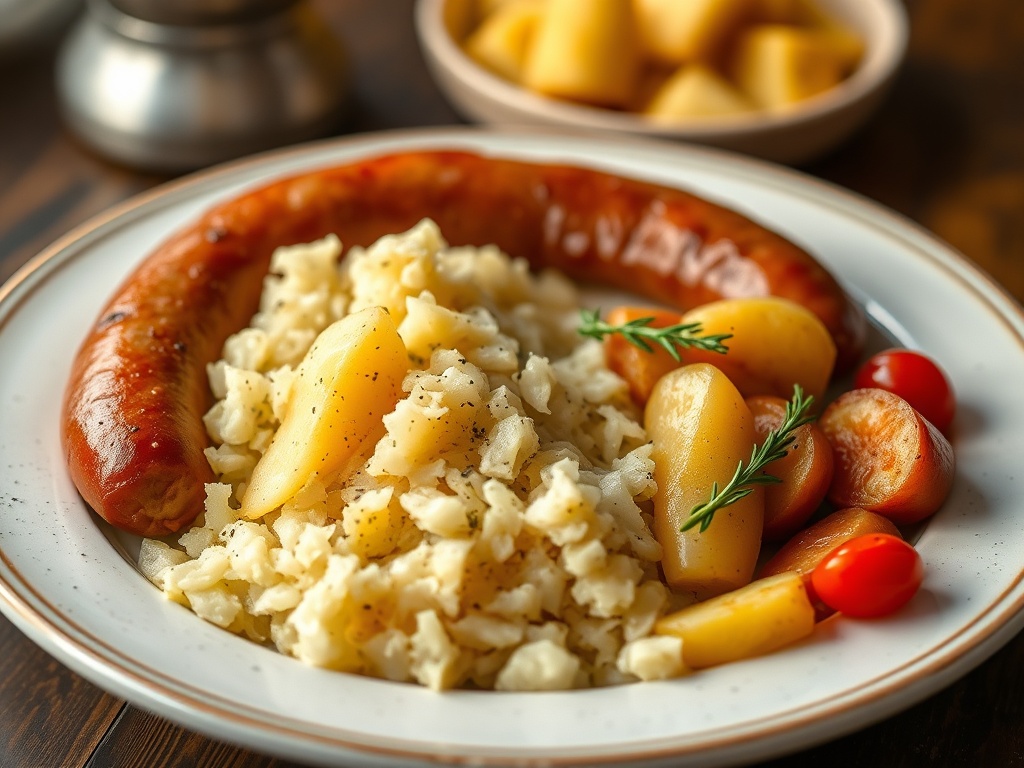
There are some dishes that simply whisper “comfort” with every hearty bite, and Polish Sausage, Sauerkraut, and Potatoes is undoubtedly one of them. This rustic, flavorful meal is a testament to the enduring power of simple ingredients combined with time-honored traditions. Rooted deeply in Polish and broader Central/Eastern European culinary heritage, it’s a dish that speaks of peasant origins, making the most of readily available, affordable components to create something truly satisfying and deeply nourishing. It’s the kind of meal that warms you from the inside out, perfect for a chilly evening or any time you crave a taste of home-cooked goodness.
What makes this dish so universally beloved is its harmonious blend of distinct flavors and textures. You have the savory, smoky richness of the kielbasa, perfectly complemented by the bright, tangy kick of sauerkraut. These bold flavors are then grounded by the humble, earthy potatoes, which absorb all the delicious juices and become incredibly tender. Add in the aromatic notes of onions and garlic, and you have a symphony of tastes that is both complex and incredibly approachable. Our recipe emphasizes ease of preparation, often requiring just one or two pots, making it an ideal candidate for weeknight dinners or a crowd-pleasing gathering. It’s a dish that satisfies deeply without demanding intricate culinary skills, proving that some of the best meals are often the most straightforward.
Nutritional Information
Per serving (approximate values):
- Calories: 650
- Protein: 35g
- Carbohydrates: 50g
- Fat: 35g
- Fiber: 8g
- Sodium: 1500mg
Ingredients
- 1.5 lbs (about 680g) smoked Polish sausage (kielbasa), preferably pork or beef/pork blend
- 2 tbsp olive oil or vegetable oil (if needed)
- 1 large yellow onion, chopped
- 3 cloves garlic, minced
- 2 lbs (about 900g) Yukon Gold or Russet potatoes, peeled and cut into 1-inch cubes
- 24 oz (about 680g) sauerkraut, drained and rinsed lightly (optional, for less tang)
- 2 cups chicken or vegetable broth
- 1 medium apple (such as Granny Smith or Honeycrisp), peeled, cored, and diced (optional, for sweetness)
- 1 tsp caraway seeds (optional, for authentic flavor)
- 1 bay leaf (optional)
- 1 tbsp Dijon mustard (optional, for serving or stirring in at the end)
- Salt and freshly ground black pepper to taste
- Fresh parsley or dill, chopped, for garnish (optional)
Instructions
- Prepare the Sausage: Slice the Polish sausage into ½-inch thick coins or half-moons.
- Brown the Sausage: Heat a large skillet, Dutch oven, or heavy-bottomed pot over medium-high heat. Add the sliced sausage and cook, stirring occasionally, until browned and slightly crispy, about 5-7 minutes. The sausage will release its own fat; if using a leaner sausage, you might need to add 1-2 tablespoons of olive oil. Remove the browned sausage with a slotted spoon and set aside, leaving any rendered fat in the pot. This browning step is crucial for developing deep, complex flavors.
- Sauté Aromatics: Reduce the heat to medium. Add the chopped onion to the pot with the sausage fat (add a little olive oil if there isn’t enough fat). Cook, stirring occasionally, until the onion softens and becomes translucent, about 5-7 minutes. Add the minced garlic and cook for another 1-2 minutes until fragrant, being careful not to burn it.
- Deglaze and Add Sauerkraut: Pour in about half a cup of the chicken or vegetable broth to deglaze the pot, scraping up any browned bits (fond) from the bottom. This fond is packed with flavor. Add the drained sauerkraut, diced apple (if using), caraway seeds (if using), and bay leaf (if using) to the pot. Stir to combine.
- Introduce Potatoes and Liquid: Add the cubed potatoes to the pot. Nestle the previously browned sausage back into the pot with the sauerkraut and potatoes. Pour in the remaining 1.5 cups of broth. The liquid should mostly cover the potatoes and sauerkraut; if not, add a little more broth or water.
- Simmer and Cook: Bring the mixture to a gentle simmer. Once simmering, reduce the heat to low, cover the pot, and cook for 20-25 minutes, or until the potatoes are fork-tender. Stir occasionally to prevent sticking and ensure even cooking.
- Season and Finish: Remove the bay leaf. Taste the dish and season with salt and freshly ground black pepper as needed. The amount of salt needed will depend on the saltiness of your broth and sauerkraut. If desired, stir in 1 tablespoon of Dijon mustard for an extra layer of flavor and tanginess.
- Serve: Ladle the hearty Polish sausage, sauerkraut, and potatoes into bowls. Garnish with fresh chopped parsley or dill, if using. Serve hot.
Cooking Tips and Variations
For the best flavor, don’t skimp on browning the sausage. That golden crust and the rendered fat form the foundation of the dish’s rich taste. When it comes to sauerkraut, adjust rinsing based on your preference for tanginess. A quick rinse under cold water can mellow its sourness significantly, while using it straight from the jar will deliver a bolder, more traditional tang. For potatoes, choose waxy varieties like Yukon Gold or Red Bliss as they hold their shape better during simmering than starchy Russets, though Russets will absorb more flavor. Uniformly dicing your potatoes is key to ensuring they cook evenly. If you prefer a richer dish, a swirl of sour cream or crème fraîche stirred in at the end adds a wonderful creaminess. For a vegetarian take, use plant-based sausages and vegetable broth, and consider adding smoked paprika for a smoky depth. You can also add other vegetables like sliced bell peppers or carrots along with the onions for extra nutrition and color. A touch of brown sugar (1-2 teaspoons) can be added with the sauerkraut to balance the tang and enhance the overall sweetness, especially if you omit the apple.
Storage and Reheating
This dish is fantastic for meal prep and often tastes even better the next day as the flavors have more time to meld. To store, allow the dish to cool completely to room temperature. Transfer it to an airtight container and refrigerate for up to 3-4 days. For reheating, individual portions can be warmed in the microwave until heated through, stirring halfway. For larger quantities, reheat gently in a pot on the stovetop over medium-low heat, adding a splash of broth or water if it seems too dry, until simmering and hot. Avoid overheating, as it can cause the potatoes to become mushy. This dish also freezes well; portion into freezer-safe containers and freeze for up to 2-3 months. Thaw overnight in the refrigerator before reheating.
Frequently Asked Questions
What kind of Polish sausage (kielbasa) should I use?
For this recipe, opt for a smoked kielbasa, which is already cooked and just needs to be heated through and browned for flavor. You can choose pork, beef, or a combination. Fresh, uncooked kielbasa can also be used but will require longer cooking to ensure it’s fully cooked before combining with other ingredients.
Do I have to rinse the sauerkraut?
Rinsing the sauerkraut is optional and depends on your personal preference for tanginess. If you enjoy a very sour flavor, you can use it straight from the jar or can. If you prefer a milder tang, a quick rinse under cold water will help reduce its acidity without completely washing away its characteristic flavor.
Can I make this dish in a slow cooker?
Yes, this recipe adapts well to a slow cooker! First, brown the sausage and sauté the onions and garlic on the stovetop as instructed. Then, transfer these to the slow cooker along with the potatoes, drained sauerkraut, broth, apple, caraway seeds, and bay leaf. Cook on low for 4-6 hours or on high for 2-3 hours, or until the potatoes are tender. Stir in Dijon mustard at the end if desired.
What are the best side dishes to serve with this meal?
This dish is quite hearty on its own, but it pairs wonderfully with simple sides. Crusty rye bread or a fresh baguette is perfect for soaking up the flavorful juices. A dollop of extra Dijon or whole-grain mustard on the side is a classic accompaniment. For something fresh, a simple green salad with a light vinaigrette can provide a nice contrast to the richness of the main course. Dill pickles or a quick pickled cucumber salad also complement the flavors beautifully.